I’ll admit it: I was becoming a Linlai fan. Their big triodes looked like props from a Jules Verne novel. The sculpted glass and elaborate plates suggested a company that was actually innovating instead of cloning dead Western Electric designs. Yes, the prices made my wallet wince, but I figured innovation costs money. So when a gold-pinned pair of Linlai Aurora 12AX7s arrived, I expected more of the same. Then I did what any self-respecting tube paranoiac does and went digging to find out whose glass this really is.
Linlai, Psvane, or Somebody Else?
The forum whisper is that these are relabeled Psvanes. That’s wrong, but it isn’t crazy. Linlai is a real factory in Changsha, founded around 2019 by engineers led by Psvane’s former head of production. They walked out and took the know-how with them. Psvane split off from Shuguang, then Linlai split off from Psvane. It’s less a family tree than a family feud with tube sockets.
Here’s the twist: Linlai doesn’t run its own 9-pin production line. The Aurora 12AX7 is built by the state-owned Shuguang factory, then screened, graded and badged by Linlai. Red-print tubes are the lower grade, and gold print with gold pins is the better selection.
And there’s a backstory. In August 2019, a fire broke out on Shuguang’s old factory grounds in Changsha. Tube production there went dark, and it stayed dark for years while the company tried to relocate. Ever since, Shuguang glass has been turning up under a parade of new names, much of it warehouse stock with a fresh decal. I can’t tell whether my pair is leftover stock or a newer run, and frankly it doesn’t matter. A new label doesn’t add bloom, doesn’t widen a soundstage, and doesn’t make a Shuguang sound like anything other than a Shuguang.
That discovery took some of the shine off the brand for me. Part of what I’d been paying for was the idea of Linlai as an innovator. Here was the same company putting its name on somebody else’s workhorse. To be fair, Linlai admits this on its own website. The Amazon listing, though, talks about meticulous hand assembly and enhanced internal structure, and never mentions Shuguang. A footnote on a website is not the same thing as honesty on the product page.
Fit and Finish
You get gold pins, an orange-gold base, and a gift box nicer than some cologne packaging. More importantly, the two tubes measured closely matched on my tester.
The Sound
I’ve lived with Shuguang 12AX7s before, so I hoped Linlai’s screening would find the gold in the pile. Instead, the story repeated itself. Against my Sylvania 5751 reference, the Aurora is a touch warmer, but only a touch. The treble is clean, but still has the brittleness I feared. The noise floor is low, and with those triple micas you could practically use it as a tent peg.
Then the music starts, and the life drains out of it. The sound is precise but flat, more solid state than tube. Images are clearly outlined but have no body, and decays stop where they should bloom. The soundstage shrinks so much that I could point to my speakers with my eyes closed, which is exactly what a good tube is supposed to make you forget. Linlai’s marketing promises a full-bodied, less analytical voice. My ears heard a very tidy spreadsheet.
Highlights
Low noise and minimal microphonics
Close matching and gold pins
Rugged, reliable construction
Lowlights
Flat, solid-state-ish presentation
Clean, but brittle treble
Shrunken soundstage with speakers easy to locate
Little harmonic bloom or “life”
Sold as a Linlai, made by Shuguang
Final Verdict
Gold pins and fancy packaging can’t change a tube’s voice, and this one speaks fluent Shuguang. If you need a quiet, reliable workhorse for a driver stage or a guitar amp, the Aurora will do the job. If you want to actually enjoy music, spend the money on a good 5751 or vintage 12ax7 (Even workhorse like GE 12ax7 did much better in my tests) and leave this pair for the spares drawer. As for Linlai, I still respect its big triodes. But I’ll never again assume that a Linlai badge means Linlai glass.
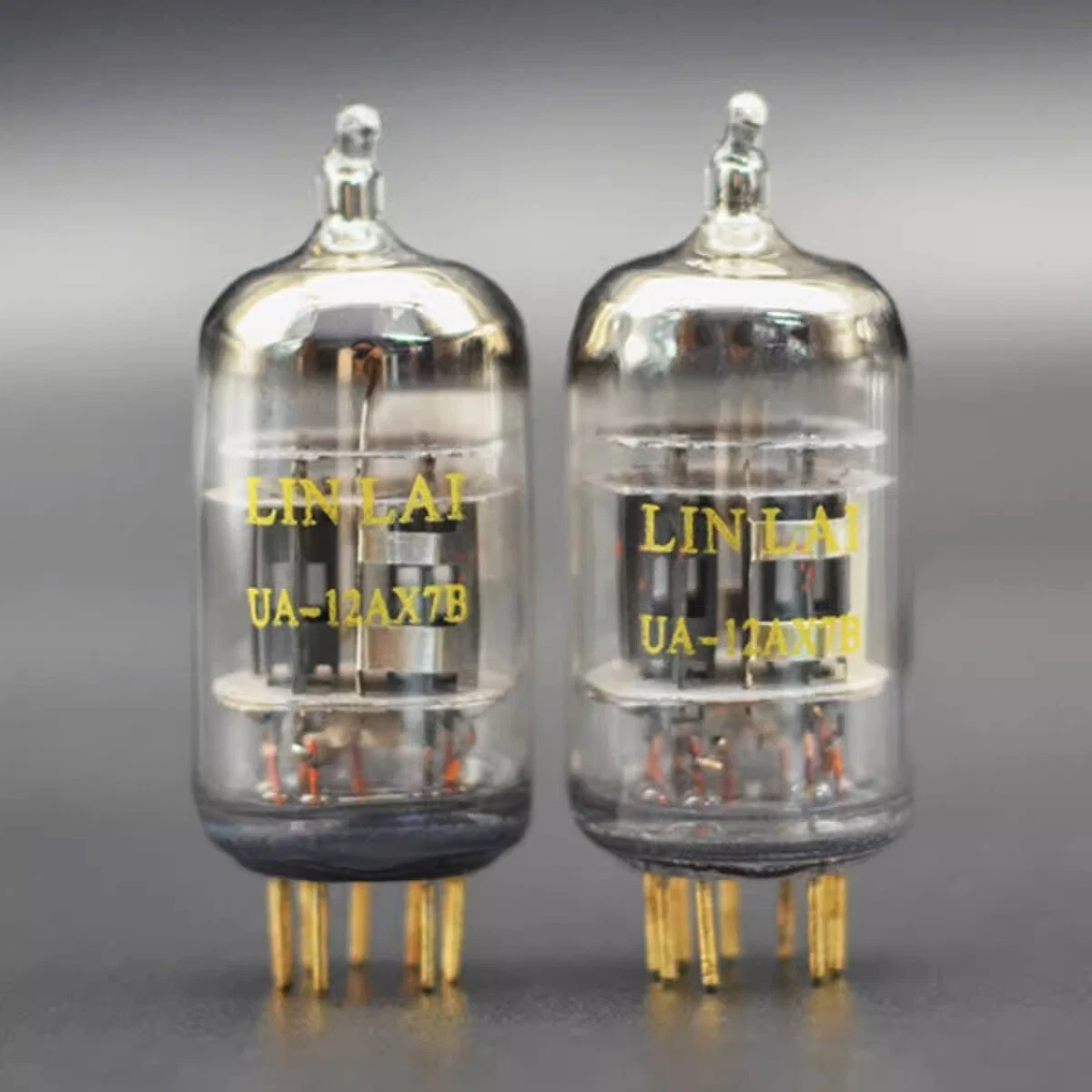

I’ll admit it: I was becoming a Linlai fan. Their big triodes looked like props from a Jules Verne novel. The sculpted glass and elaborate plates suggested a company that was actually innovating instead of cloning dead Western Electric designs. Yes, the prices made my wallet wince, but I figured innovation costs money. So when a gold-pinned pair of Linlai Aurora 12AX7s arrived, I expected more of the same. Then I did what any self-respecting tube paranoiac does and went digging to find out whose glass this really is.
Linlai, Psvane, or Somebody Else?
The forum whisper is that these are relabeled Psvanes. That’s wrong, but it isn’t crazy. Linlai is a real factory in Changsha, founded around 2019 by engineers led by Psvane’s former head of production. They walked out and took the know-how with them. Psvane split off from Shuguang, then Linlai split off from Psvane. It’s less a family tree than a family feud with tube sockets.
Here’s the twist: Linlai doesn’t run its own 9-pin production line. The Aurora 12AX7 is built by the state-owned Shuguang factory, then screened, graded and badged by Linlai. Red-print tubes are the lower grade, and gold print with gold pins is the better selection.
And there’s a backstory. In August 2019, a fire broke out on Shuguang’s old factory grounds in Changsha. Tube production there went dark, and it stayed dark for years while the company tried to relocate. Ever since, Shuguang glass has been turning up under a parade of new names, much of it warehouse stock with a fresh decal. I can’t tell whether my pair is leftover stock or a newer run, and frankly it doesn’t matter. A new label doesn’t add bloom, doesn’t widen a soundstage, and doesn’t make a Shuguang sound like anything other than a Shuguang.
That discovery took some of the shine off the brand for me. Part of what I’d been paying for was the idea of Linlai as an innovator. Here was the same company putting its name on somebody else’s workhorse. To be fair, Linlai admits this on its own website. The Amazon listing, though, talks about meticulous hand assembly and enhanced internal structure, and never mentions Shuguang. A footnote on a website is not the same thing as honesty on the product page.
Fit and Finish
You get gold pins, an orange-gold base, and a gift box nicer than some cologne packaging. More importantly, the two tubes measured closely matched on my tester.
The Sound
I’ve lived with Shuguang 12AX7s before, so I hoped Linlai’s screening would find the gold in the pile. Instead, the story repeated itself. Against my Sylvania 5751 reference, the Aurora is a touch warmer, but only a touch. The treble is clean, but still has the brittleness I feared. The noise floor is low, and with those triple micas you could practically use it as a tent peg.
Then the music starts, and the life drains out of it. The sound is precise but flat, more solid state than tube. Images are clearly outlined but have no body, and decays stop where they should bloom. The soundstage shrinks so much that I could point to my speakers with my eyes closed, which is exactly what a good tube is supposed to make you forget. Linlai’s marketing promises a full-bodied, less analytical voice. My ears heard a very tidy spreadsheet.
Highlights
Lowlights
Final Verdict
Gold pins and fancy packaging can’t change a tube’s voice, and this one speaks fluent Shuguang. If you need a quiet, reliable workhorse for a driver stage or a guitar amp, the Aurora will do the job. If you want to actually enjoy music, spend the money on a good 5751 or vintage 12ax7 (Even workhorse like GE 12ax7 did much better in my tests) and leave this pair for the spares drawer. As for Linlai, I still respect its big triodes. But I’ll never again assume that a Linlai badge means Linlai glass.