The KEF R3 Meta arrives with an avalanche of critical acclaim. Professional reviewers widely praise its engineering, highlighting its incredibly flat frequency response, excellent dispersion, and advanced Metamaterial Absorption Technology (MAT). On paper, it represents a textbook triumph of modern loudspeaker design.
For a long time, I have been on an elusive hunt for a truly great, affordable speaker cable. If you have spent any time in the hifi community, you already know the unwritten rule: “great” and “affordable” are two words that rarely belong in the same sentence when discussing cables. The market is flooded with exotic, snake-oil alternatives that demand hundreds—if not thousands—of dollars, usually backed by nothing more than poetic marketing fluff.
The Reisong A50 MKIII (also known as the BoyuuRange A50) arrives with a reputation that precedes it. In a market where single-ended triode (SET) 300B amplifiers routinely command thousands of dollars, this unit stands out as an impossibly affordable tube amp, costing just $849 at the time of writing. For audiophiles on a budget, the temptation of securing that legendary 300B glowing warmth for a fraction of the usual cost is almost irresistible.
In the high-fidelity world of vacuum tube amplifiers, enthusiasts often seek out specific tubes for their perceived sonic characteristics and superior construction. One key differentiator in many legendary vintage tubes is the implementation of a frame grid instead of the standard, traditionally wound grid.
The Triangle Signature Theta is a speaker that stands as a testament to French hi-fi craftsmanship. After spending significant time with these monitors, it is clear they are designed for a specific kind of musical intimacy that is hard to find in this price bracket.
In the vast and winding history of vacuum tubes, few components have achieved the ubiquity and enduring relevance of the 12AU7. This unassuming, medium-mu dual triode became the workhorse of countless electronic devices, finding its way into classic amplifiers, sophisticated military gear, and robust industrial machinery. Its journey from a post-war necessity to an audiophile favorite is a testament to its practical and adaptable design.
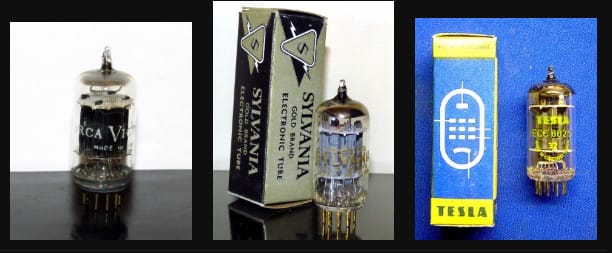
The landscape of European vacuum tube production is a complex tapestry of specialized engineering, strategic corporate mergers, and distinct national identities. During the “Golden Age” of analog audio, a handful of key manufacturers defined the standards for thermal emission technology, creating components that remain the benchmarks for high-fidelity performance today.
Whenever I read mainstream reviews of modern bookshelf speakers, they almost always test them using high-current, solid-state amplification. But to my ears, a speaker’s true character doesn’t fully wake up until you hook it up to a glowing tube amplifier. I wanted to see if the Triangle Borea BR04 could hold its own in a low-wattage triode ecosystem.
There is a particular kind of audiophile smugness that comes from owning an amplifier nobody at the show has heard of. I had it for months, I wasn’t proud of it, and I wasn’t planning on giving it up. Then I lifted the lid. More on that shortly. The object in question is the Audio by Van Alstine FET Valve 400R, a 200Wpc hybrid power amplifier built in a suburb of Minneapolis and descended directly from the work of a man who spent some sixty years arguing with the high-end audio industry. Frank Van Alstine died on January 29, 2025, at the age of 87. I want to say that near the top rather than bury it, because it changes how you read an amplifier like this one: the 400R is no longer just a product, it is a surviving argument. The company continues in Minnesota under new leadership with longtime lead engineer Mithat still designing, still building, still answering the email. But the man whose name is on the faceplate is gone, and reviewing his amplifier now feels less like reporting and more like reading someone’s handwriting.
The Douk Audio A5is a highly discussed mini Class D stereo amplifier built around the Texas Instruments TPA3255 chip. While it brings a unique design and an impressive feature set to the table for its price, web reviews point to a stark contrast between its visual appeal and its actual sonic performance.