“Highs are rolled off – too much so for my liking” Read
Share this post:
2 thoughts on “Mullard E88CC/6922 Wrinkled Glass O-getter”
There is no mistaking the sonic signature of the Mullard E88CC/6922 Wrinkled Glass; it carries that classic Mullard house sound that is impossible to confuse with anything else. However, despite its legendary status, it isn’t necessarily a personal favorite within the 6922 family. The primary drawback is the high-frequency extension, which rolls off a bit too early for my taste, resulting in a presentation that feels overly warm and a soundstage that lacks the width found in rival tubes.
There isn’t much “lightness” to the delivery; the sound is decidedly heavy. While this character might be a perfect “tonic” for an overly bright or clinical system, it can feel a bit sluggish in others. On the positive side, that signature warmth adds fantastic weight to the bass, which kicks with impressive strength and precision. While many consider this the “best of the best” for the 6922 type, it failed to truly capture my attention across the three different amplifiers used for testing.
The Mystery of Mullard Wrinkled Glass
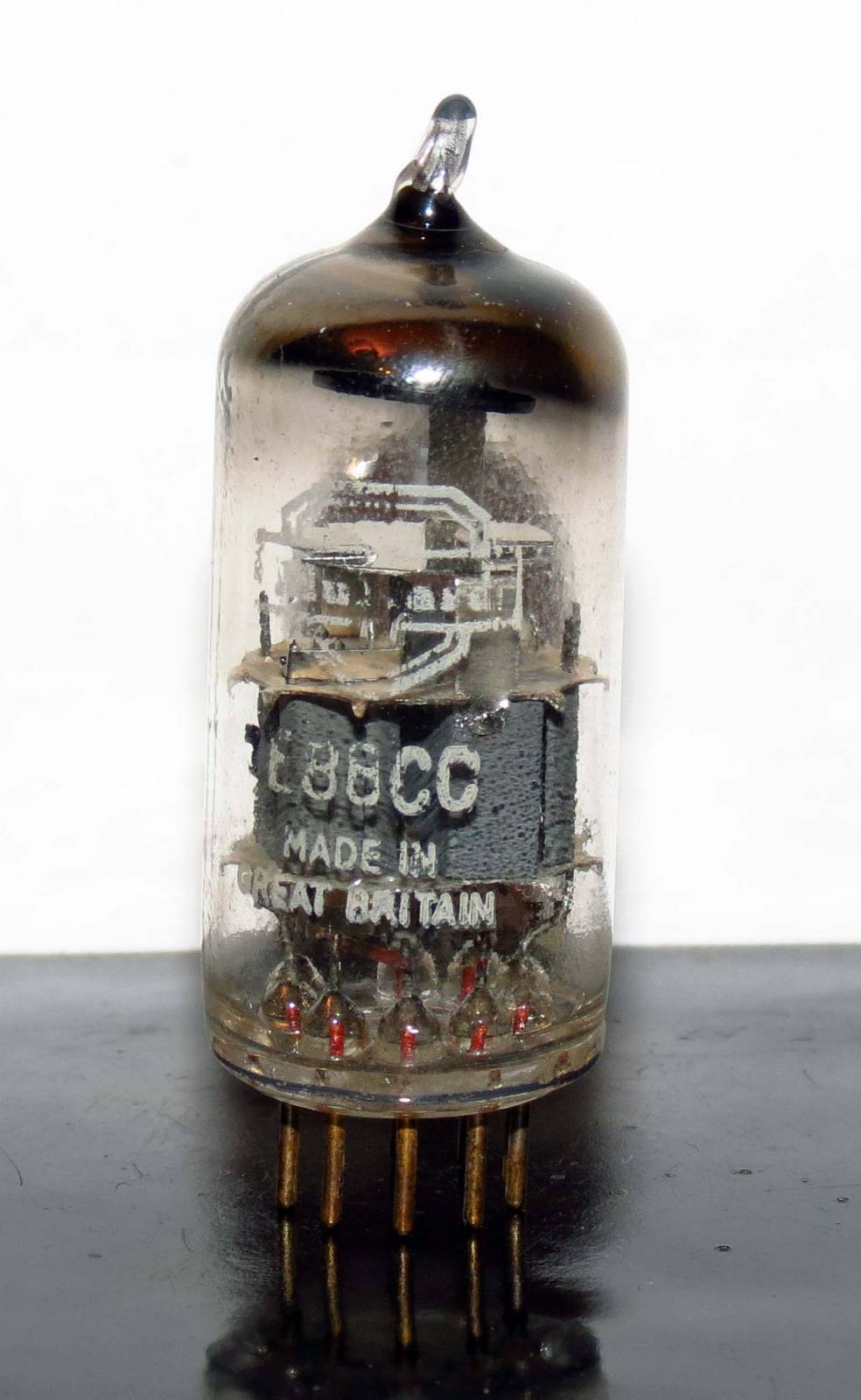
The “wrinkled” or “dimpled” glass found on certain Mullard tubes is a distinctive physical trait that has sparked much debate among collectors. Technically, this was not an intentional “feature” designed to alter the sound, but rather a byproduct of the manufacturing and cooling process at the Mitcham and Blackburn factories.
During production, the glass envelopes were heated to extreme temperatures to ensure a proper seal. If the glass was cooled at a specific rate or if the glass chemistry had slight variations, the surface would develop these unique undulations and wrinkles. While some audiophiles theorize that the irregular surface helps break up glass resonances or improves heat dissipation, it is primarily a visual hallmark of early, high-quality British glasswork. For collectors, “wrinkled glass” serves as a reliable indicator of a genuine, early-production Mullard valve from an era known for superior materials.
Final Verdict
The Mullard E88CC Wrinkled Glass is a specialized tool best used for taming bright systems and adding massive bass authority. While its rolled-off highs prevent it from being a universal “top-tier” recommendation for every listener, its unique warmth remains a benchmark for vintage British tone.
I like other versions better. The highs are a bit subdued on these. They get worse as the tube ages. For the preamps I have for recording, or instruments these are okay to tame some voices, and instruments. For sound reproduction they are not my favorite E88CC. These are much too dark for my tastes. The staging lacks high freq detail, especially in labial sounds, and percussion like cymbals.


 (6 votes, average: 3.33 out of 5)
 Loading...
There is no mistaking the sonic signature of the Mullard E88CC/6922 Wrinkled Glass; it carries that classic Mullard house sound that is impossible to confuse with anything else. However, despite its legendary status, it isn’t necessarily a personal favorite within the 6922 family. The primary drawback is the high-frequency extension, which rolls off a bit too early for my taste, resulting in a presentation that feels overly warm and a soundstage that lacks the width found in rival tubes.
There isn’t much “lightness” to the delivery; the sound is decidedly heavy. While this character might be a perfect “tonic” for an overly bright or clinical system, it can feel a bit sluggish in others. On the positive side, that signature warmth adds fantastic weight to the bass, which kicks with impressive strength and precision. While many consider this the “best of the best” for the 6922 type, it failed to truly capture my attention across the three different amplifiers used for testing.
The Mystery of Mullard Wrinkled Glass
The “wrinkled” or “dimpled” glass found on certain Mullard tubes is a distinctive physical trait that has sparked much debate among collectors. Technically, this was not an intentional “feature” designed to alter the sound, but rather a byproduct of the manufacturing and cooling process at the Mitcham and Blackburn factories.
During production, the glass envelopes were heated to extreme temperatures to ensure a proper seal. If the glass was cooled at a specific rate or if the glass chemistry had slight variations, the surface would develop these unique undulations and wrinkles. While some audiophiles theorize that the irregular surface helps break up glass resonances or improves heat dissipation, it is primarily a visual hallmark of early, high-quality British glasswork. For collectors, “wrinkled glass” serves as a reliable indicator of a genuine, early-production Mullard valve from an era known for superior materials.
Final Verdict
The Mullard E88CC Wrinkled Glass is a specialized tool best used for taming bright systems and adding massive bass authority. While its rolled-off highs prevent it from being a universal “top-tier” recommendation for every listener, its unique warmth remains a benchmark for vintage British tone.
I like other versions better. The highs are a bit subdued on these. They get worse as the tube ages. For the preamps I have for recording, or instruments these are okay to tame some voices, and instruments. For sound reproduction they are not my favorite E88CC. These are much too dark for my tastes. The staging lacks high freq detail, especially in labial sounds, and percussion like cymbals.