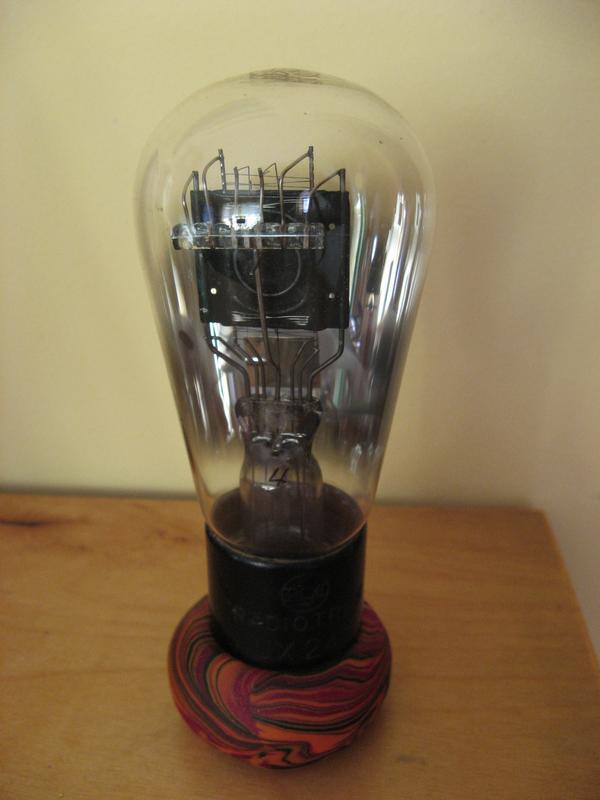
Evaluating the Type 45 Globe black plates has been a transformative experience, moving beyond mere interest into a complete shift in perspective. Having previously optimized the Bottlehead Crack amplifier with elite glass such as the Western Electric 421A and various premium 12AU7 variants, I was skeptical about the potential for further improvement. However, upon completing a custom Type 45 headphone amplifier, the sonic results were nothing short of extraordinary.
The Type 45 offers a level of transparency and midrange liquidity that is difficult to overstate. The transition from high-end modern setups to the Type 45 is akin to moving from standard tap water to fresh spring water; there is an inherent sweetness and clarity that feels entirely natural. Furthermore, the soundstage capabilities of this tube are reference-grade, setting a standard by which all other spatial presentations should be measured.
The only notable compromise is in the lower frequencies. The bass response is quite soft and lacks the “impact” or “kick” found in more modern tube designs. There are two primary structural variations of this tube: the earlier Globe shape and the later ST (Shoulder Tube) shape. The Globe version provides a slightly softer, more “tubey” character, while the ST variant is marginally more precise, though both are world-class performers. Switching back to a modern JJ 300B after this experience was jarring; the modern tube sounded uncomfortably sharp and clinical by comparison.
History of the Type 45 Tube
The Type 45 was introduced in 1929 by RCA and Cunningham as a power triode intended for domestic radio receivers. It was a significant advancement at the time, providing approximately 1.6 watts of power—enough to drive the sensitive speakers of the era with high fidelity.
Originally produced in the Globe (S-shape) glass envelope, the design was updated in the early 1930s to the ST-shape for better mechanical stability and heat dissipation. Despite its low power output, the Type 45 became a favorite among early audiophiles due to its exceptionally linear amplification. While it was eventually eclipsed by higher-power tubes like the 2A3 and 300B, it remains legendary today for its “purity” of sound, as its simple internal structure introduces minimal phase shift and distortion.
Final Verdict
If you believe you have reached the pinnacle of audio performance without experiencing vintage triodes like the Type 45 Globe, you are in for a significant revelation. It trades raw power and aggressive bass for unmatched midrange magic and holographic imaging. It is an essential experience for any serious enthusiast seeking the most organic sound possible.
One relevant follow-up: are you planning to use the Type 45 in a high-efficiency speaker setup or strictly for a dedicated headphone system?



 (7 votes, average: 3.71 out of 5)
 Loading...
Evaluating the Type 45 Globe black plates has been a transformative experience, moving beyond mere interest into a complete shift in perspective. Having previously optimized the Bottlehead Crack amplifier with elite glass such as the Western Electric 421A and various premium 12AU7 variants, I was skeptical about the potential for further improvement. However, upon completing a custom Type 45 headphone amplifier, the sonic results were nothing short of extraordinary.
The Type 45 offers a level of transparency and midrange liquidity that is difficult to overstate. The transition from high-end modern setups to the Type 45 is akin to moving from standard tap water to fresh spring water; there is an inherent sweetness and clarity that feels entirely natural. Furthermore, the soundstage capabilities of this tube are reference-grade, setting a standard by which all other spatial presentations should be measured.
The only notable compromise is in the lower frequencies. The bass response is quite soft and lacks the “impact” or “kick” found in more modern tube designs. There are two primary structural variations of this tube: the earlier Globe shape and the later ST (Shoulder Tube) shape. The Globe version provides a slightly softer, more “tubey” character, while the ST variant is marginally more precise, though both are world-class performers. Switching back to a modern JJ 300B after this experience was jarring; the modern tube sounded uncomfortably sharp and clinical by comparison.
History of the Type 45 Tube
The Type 45 was introduced in 1929 by RCA and Cunningham as a power triode intended for domestic radio receivers. It was a significant advancement at the time, providing approximately 1.6 watts of power—enough to drive the sensitive speakers of the era with high fidelity.
Originally produced in the Globe (S-shape) glass envelope, the design was updated in the early 1930s to the ST-shape for better mechanical stability and heat dissipation. Despite its low power output, the Type 45 became a favorite among early audiophiles due to its exceptionally linear amplification. While it was eventually eclipsed by higher-power tubes like the 2A3 and 300B, it remains legendary today for its “purity” of sound, as its simple internal structure introduces minimal phase shift and distortion.
Final Verdict
If you believe you have reached the pinnacle of audio performance without experiencing vintage triodes like the Type 45 Globe, you are in for a significant revelation. It trades raw power and aggressive bass for unmatched midrange magic and holographic imaging. It is an essential experience for any serious enthusiast seeking the most organic sound possible.
One relevant follow-up: are you planning to use the Type 45 in a high-efficiency speaker setup or strictly for a dedicated headphone system?