This is one of the main reasons I created the site. Incredibly famous tubes, but at the end of the day I couldn’t find reviews for the tubes just statements that it’s the best, so read on to learn more…
Share this post:
One thought on “Telefunken EL84”
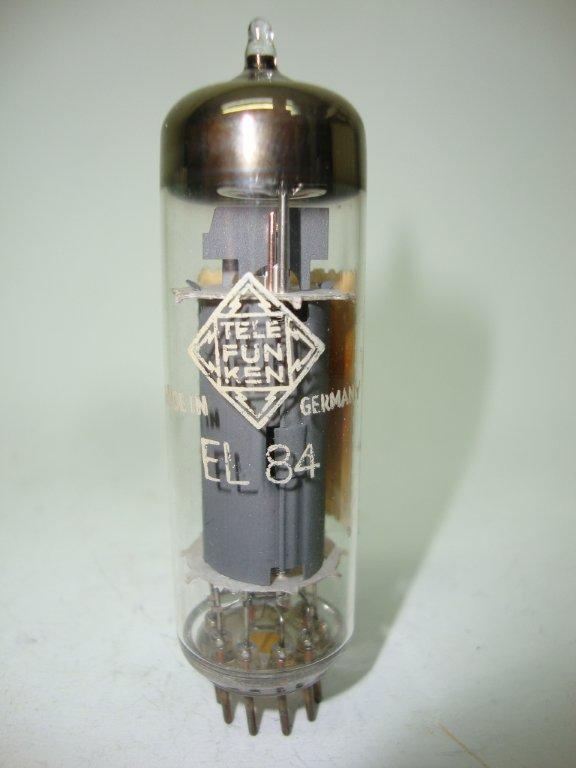
Telefunken, Telefunken, Telefunken. Many enthusiasts speak of the Telefunken EL84, yet few can truly articulate the specific strengths and weaknesses of this legendary valve. While it is often heralded as the “best” EL84 ever made, the reality is more nuanced. This tube is a masterclass in German engineering—superbly controlled, absolutely precise, and incredibly neutral.
In vintage tube gear, the Telefunken EL84 performs wonderfully, providing a top-end frequency extension that allows older amplifiers to truly open up. However, in modern equipment, that same precision can be a double-edged sword, sometimes making a system sound too thin or overly bright. It lacks the mid-range lusciousness of an Amperex and cannot match the authoritative bass of the Soviet 6P14P-EV. It is a fantastic tube in the right application, but it can feel mediocre if mismatched with modern, already-bright gear.
History of the EL84 and the Telefunken Mystique
The EL84 (also known by its American designation, 6BQ5) was introduced by Philips in 1953. It was designed to be a high-sensitivity power pentode that could produce significant output power from a small glass envelope, making it the heart of legendary “bookshelf” hi-fi amps and guitar amplifiers like the Vox AC30.
Telefunken became the most desirable manufacturer of this type due to their unrivaled quality control and proprietary materials. Produced primarily at their Ulm and Berlin factories, Telefunken tubes featured a “diamond” mark molded into the glass base between the pins—a sign of authentic German manufacturing. They were sought after by professionals because they offered the lowest noise floor and most linear response in the industry. For the listener, this meant a “see-through” transparency that was essential for the high-fidelity movement of the 1950s and 60s.
Final Verdict
The Telefunken EL84 remains the gold standard for neutrality. If your system requires more “air” and surgical precision, there is no better choice. However, if you crave warmth and heavy bass, you may find better synergy with Dutch or Russian alternatives. It is a highly recommended component, provided you understand its analytical nature.



 (37 votes, average: 3.89 out of 5)
 Loading...
Telefunken, Telefunken, Telefunken. Many enthusiasts speak of the Telefunken EL84, yet few can truly articulate the specific strengths and weaknesses of this legendary valve. While it is often heralded as the “best” EL84 ever made, the reality is more nuanced. This tube is a masterclass in German engineering—superbly controlled, absolutely precise, and incredibly neutral.
In vintage tube gear, the Telefunken EL84 performs wonderfully, providing a top-end frequency extension that allows older amplifiers to truly open up. However, in modern equipment, that same precision can be a double-edged sword, sometimes making a system sound too thin or overly bright. It lacks the mid-range lusciousness of an Amperex and cannot match the authoritative bass of the Soviet 6P14P-EV. It is a fantastic tube in the right application, but it can feel mediocre if mismatched with modern, already-bright gear.
History of the EL84 and the Telefunken Mystique
The EL84 (also known by its American designation, 6BQ5) was introduced by Philips in 1953. It was designed to be a high-sensitivity power pentode that could produce significant output power from a small glass envelope, making it the heart of legendary “bookshelf” hi-fi amps and guitar amplifiers like the Vox AC30.
Telefunken became the most desirable manufacturer of this type due to their unrivaled quality control and proprietary materials. Produced primarily at their Ulm and Berlin factories, Telefunken tubes featured a “diamond” mark molded into the glass base between the pins—a sign of authentic German manufacturing. They were sought after by professionals because they offered the lowest noise floor and most linear response in the industry. For the listener, this meant a “see-through” transparency that was essential for the high-fidelity movement of the 1950s and 60s.
Final Verdict
The Telefunken EL84 remains the gold standard for neutrality. If your system requires more “air” and surgical precision, there is no better choice. However, if you crave warmth and heavy bass, you may find better synergy with Dutch or Russian alternatives. It is a highly recommended component, provided you understand its analytical nature.