
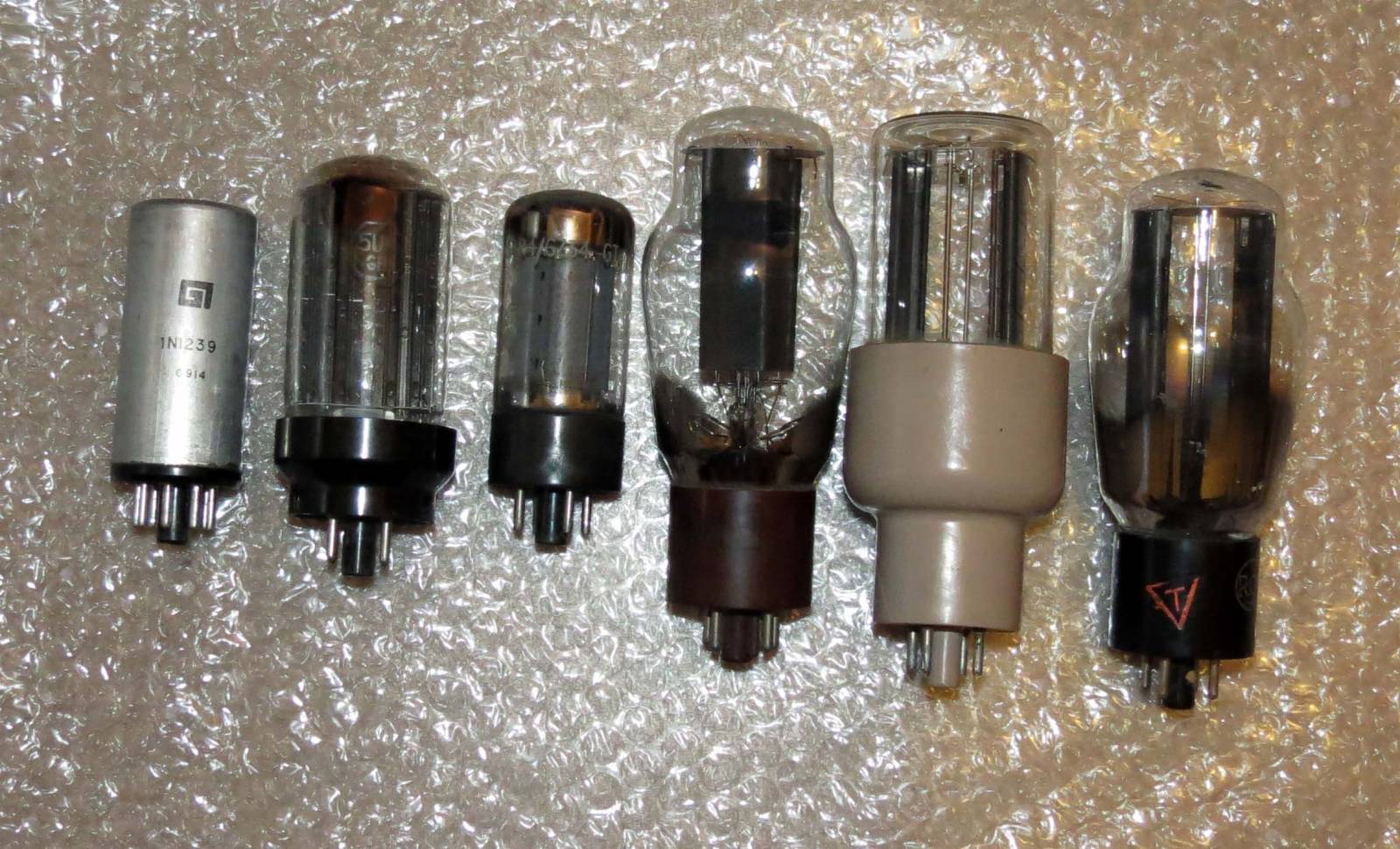
A common debate among audiophiles is whether the choice of rectifier tube significantly alters the sonic profile of an amplifier. To investigate this, I conducted a series of tests using a flexible amplifier circuit designed for a 5U4 rectifier, allowing for direct comparison with 5Y3, 5Z3, 5AR4, and solid-state alternatives.
The results confirmed that the rectifier is not merely a utility component; it is a critical variable in the signal chain.
The Correlation Between Voltage Drop and Sonic Character
The primary driver of these sonic shifts is the voltage drop inherent to each tube type. This variance alters the operating points of the entire circuit, fundamentally changing how the amplifier handles the audio signal.
| Rectifier Type | Typical Voltage Drop | Sonic Characteristics |
| 5AR4 (GZ34) | ~17V | Exceptional transparency and speed; tight transients. May sacrifice “warmth.” |
| 5Z4G | ~20V | High dynamic range, similar in character to the 5AR4. |
| 5U4G | ~44V | Softer presentation; reduces high-frequency sharpness. |
| 5U4GB | ~50V | Increased softness compared to the “G” variant due to the higher drop. |
| 5Y3GT | ~60V | Notable sharpness and high-frequency definition. |
| 5R4 | ~67V | Improved top-end transparency and significantly tighter bass response. |
Key Observations
- Operating Points: Lower voltage drops (like the 17V of a Mullard 5AR4) lead to a tighter, more “modern” sound. Conversely, higher voltage drops often yield a more relaxed, “vintage” presentation.
- Tube Synergy: While the 5AR4 provides excellent speed, it can occasionally feel too lean when paired with tubes like the Type 45 or 2A3, where traditional “tube warmth” is often the goal.
- Brand vs. Type: My testing indicated that the tube type and its electrical specifications (voltage drop and internal impedance) are far more influential than the manufacturer. For example, GE and RCA tubes of the same type produced nearly identical results.
- Solid-State Comparison: Moving to a solid-state rectifier resulted in a much more aggressive top-end and a clinical sharpness, often at the expense of the harmonic richness typically associated with tube amplification.
Conclusion
While the magnitude of the change depends heavily on the specific circuit design, it is clear that rectifiers play a pivotal role in shaping an amplifier’s voice. By selecting a rectifier based on its voltage drop characteristics, you can effectively “tune” your system’s transparency, dynamics, and warmth.
You have touched on several important points re: tube rectifier sonic differences, and offered some great real-world, practical and useful information about the VERY confusing issue of “rectifier sound”. Sonic differences in rectifiers has always fascinated me, and I have figured SOME of it out (but not all by any means!) The first huge variable as to how different rectifiers have a unique sonic signature from each other is basic construction type. Common tube rectifiers developed in the 1930s and 1940s such as USA types 5U4, 5R4, 5V3, WECO 274B etc, and U.K. / European rectifiers such as the legendary U52 are all what is known as “filamentary cathode” or “directly heated” types. Just like the legendary audio triodes like type 45 and type 300B, the directly heated/filamentary cathode rectifiers (5U4 etc) use a thoriated tungsten cathode that is ALSO the heater for the tube. When heater voltage is applied to a directly heated/filamentary cathode rectifier, it is able to produce DC voltage almost immediately. More about that issue later. The other main type of rectifier is the Indirectly Heated type such as GZ34/5AR4, 5V4, GZ37, 6X5 etc etc. These rectifier tubes have a heater and a cathode that are two separate units in the tube, electrically speaking. They use a traditional sleeved cathode just like KT88 etc; the cathode sleeve is a metal tube with a heating element, or filament, inside and a coating on the outside of that cathode sleeve comprised of various oxides of barium, along with small amounts of other metallic and semi-metallic elements that all have thermionic emissive properties, meaning that when heated they release huge amounts of electrons. The electrical differences between these two types of rectifiers, directly heated (5U4, 5R4) or indirectly heated cathodes (GZ34 etc), are the largest by far reason the two types sound vastly different. Also, the ability to release vast amount of electrons at light speed, internal plate to plate impedance, and other factors like how each type handles internal stray capacitance make these two types sound so different. IMHO, directly heated rectifiers like 5U4 have a “faster” more “transparent” sound with a lot of punch, speed, and dynamics as compared to a Mullard GZ34. The legendary GZ34, though, has a much more refined, more “hifi” sound with smoother treble, warm detailed mids, and less edgy sonics than directly heated types like 5U4. I tend to favor the indirectly heated rectifiers not just sonically, but for the “cathode stripping” issue that I’ll cover in part 2. As far as sonic differences within the indirectly-heated filament type rectifiers like GZ34: The various formulas for these barium-based, cathode coating/electron-emitting emulsions were the most closely guarded secrets of tube manufactures in the golden age of tubes (1940s to 1970s) The exact formula and more importantly the way it was applied to the cathode sleeve (i.e. emulsion applied all at once, or in layers with drying time in between coatings, for example) were largely responsible for the different sound/sonic signature of the different cathode-sleeve/indirectly heated rectifiers. Likewise, the manner in which the thoriated tungsten melt was done for directly heated rectifiers causes huge sonic differences. As for voltage drop– voltage drop is an EFFECT, caused by the electrical nature of a specific rectifier, mostly internal impedances between the tube elements. The internal impedances between the tungsten filament and the plate, the small stray capacitances inside the tube (the top mica of a rectifier tube basically acts like a small mica capacitor in circuit; the mica itself and the various DC voltages that stray from the tube elements that are anchored by the mica create capacitance).. these factors combine to create the voltage drop, but more importantly they hugely affect the tubes in circuit performance. Internal impedance relationships inside a rectifier are the single largest variable in sonic signature, with the second most important being manufacturing techniques and quality control. Whew! Part 2 will look at peak inverse voltage, capacitor/choke issues, and go a little deeper on the “why” of rectifier sonic differences.
Sorry to create a bit of confusion in the first post about rectifier tubes– stray capacitance doesn’t have much (if anything) to do with creating voltage drop itself but this stray capacitance (and how the rectifier tube deals with it in-circuit) is HUGE as far as affecting the overall sound of various rectifiers. I mixed the two concepts of voltage drop and stray capacitance by trying to tackle both at once…Voltage drop is almost exclusively a direct result of internal, inter-electrode impedance within a rectifier tube. This voltage drop is not caused by stray capacitance… Stray capacitance has much more subtle effects on the way a rectifier behaves under real-world audio applications in a tube amp. I didn’t mean to mix the two concepts and just wanted to clarify. Later today I’ll go into such things as WHY there is no modern GZ34 tube that can compare with a vintage Mullard… Also, we can examine the cathode stripping issue on input and output tubes– that is, gradual cathode stripping/degrading in audio signal tubes resulting from using solid state diode rectifiers as well as directly heated rectifiers like 5U4 in a power supply…. And most importantly for the real world we will take a look at how to build a power supply that minimizes the sonic differences present in different rectifier tubes. Sorry for any confusion in the above post; I over-reached a bit! Thanks very much.
A problem caused by directly heated or filamentary cathode rectifiers is known as cathode stripping. Cathode stripping is a highly technical issue, but the basics of it are this: Filamentary Cathode rectifier tubes like 5R4, 5U4, 274B etc can deliver full DC levels only FIVE seconds after powering up an amp in which they are installed. In contrast, it takes TWELVE seconds, more or less, for the input tubes (12AX7, 12AU7, 6SN7 etc) and the output tubes (KT88, EL34 etc) to even BEGIN conducting this DC voltage.. so there are about 7 seconds where full DC levels are applied to the power supply capacitors and the audio input and output tubes… and these tubes are not ready to use/conduct this DC voltage. Thus, when the audio tubes do begin to conduct current at ca. twelve seconds after the amplifier is turned on, the 5U4/5R4 type rectifiers have already been charging the entire circuit with full DC current/voltage levels for 6-7 seconds. This difference in warm-up time causes a huge transient surge of current and electron emission in the cathodes of the input and output tubes as these audio tubes begin emitting electrons and thus conducting current— The audio tubes essentially are “slammed” by the full DC levels that have been present for several seconds before they were able to conduct current. These extreme transient currents and emission levels at the moment when the audio tubes begin to emit electrons and thus conduct current causes cumulative damage to the cathode. This cumulative damage gradually begins “stripping” precious cathode emulsion away as small amounts of the cathode emulsion are literally boiled off the cathode during the brief but intense current spike as the audio tubes first reach operating temperature some 7 seconds later than a filamentary cathode rectifier reaches operating temperature. The damage is rather small each time, but over the course of hundreds of turn-on cycles when the amplifier is powered up it cumulatively contributes to an early death for expensive audio tubes. Cathode Stripping is NOT an issue with triode output tubes like type 45, 2A3, 300B, 6B4G etc because these early triodes are filamentary cathode/directly heated tubes just like 5U4/5R4 etc.. these early triode output tubes reach operating temperature at the same exact time a 5U4 or 5R4 will. To eliminate cathode stripping, indirectly heated/cathode sleeve-type rectifiers like 5V4, 5Z4, GZ30, GZ34, GZ37, 6X5 and many others were developed by tube designers. These tubes, being indirectly heated, take 12 seconds to even begin delivering DC voltage/current, and are only able to deliver maximum DC voltage and current levels to the audio tubes after 18-20 seconds. This is known as a “slow ramp up” of the DC voltage applied to the circuit by a rectifier, and this characteristic of delayed delivery of DC voltage to the audio tubes in an amplifier eliminates the intense current spikes that can stress power supply capacitors and cause cathode stripping in audio tubes. This is why indirectly heated rectifiers such as the legendary Mullard GZ34 are so much in demand. Slow ramp-up of the DC avoids huge transient current spikes, and thus prolongs the life not just of the expensive audio amplifying tubes but also the power supply capacitors and the power transformer itself. In the next section, I’ll go deeper into the indirectly heated rectifiers like GZ34/5V4/5Z4 etc, comparing and contrasting their electrical parameters, and referencing these abstract electrical data to real-world performance Finally, a large percentage of modern tube equipment uses solid state diodes to rectify DC; a diode can deliver full voltage and current in less than a second after turn-on. Well-designed modern tube equipment uses a variety of methods to delay the instantaneous voltage/current delivery of these diodes and thus it is not generally a problem. Likewise, there are delay devices available that allow slow ramp-up of DC levels with filamentray cathode rectifiers like 5U4 for audiophiles who prefer the sound of the directly heated type rectifiers.