“Siemens have better performance in extension, mare transparent and solid sound, great in piano and guitars” Read
“the best out there if you value clarity, dynamics, tonality, and smoothness” Read
Share this post:
3 thoughts on “Siemens 12au7 Chrome Plates”
Wow, what a solid performer. The Siemens 12AU7 Chrome Plates is an absolutely beautiful valve, delivering delicate vocals with a massive amount of detail across the entire audible band. What is truly impressive is that it manages this level of resolution without becoming tiring, a common pitfall for many high-transparency tubes. While it might not reach the surgical transparency of a 6N30P-DR, compared to even the finest 12AU7s, this one is superb.
The midrange is inviting and delicate, paired with a brilliant top-end extension that makes it a clear winner for high-fidelity setups. Is it a perfect tube? Not quite. It is incredible for modern recordings, but when playing music from the 50s and 60s, it lacks the specific “dark” tone and harmonic richness required for that era. For those vintage textures, a Mullard Long Plate or Westinghouse Black Plate would be a more suitable choice, but for clarity and air, the Siemens is hard to beat.
A Legacy of German Engineering: Siemens & Halske
The history of Siemens vacuum tubes is rooted in the legendary Siemens & Halske plant in Munich, Germany. Established as a titan of industrial electronics, Siemens became synonymous with “Post-era” (German Post Office) and military-grade telecommunications equipment. Their tube production was characterized by extreme mechanical precision and a laboratory-like approach to materials. Unlike many manufacturers who prioritized a “lush” sound, Siemens focused on linear frequency response and longevity, making their valves some of the most reliable ever produced in Europe.
The Secret of the Chrome Plates
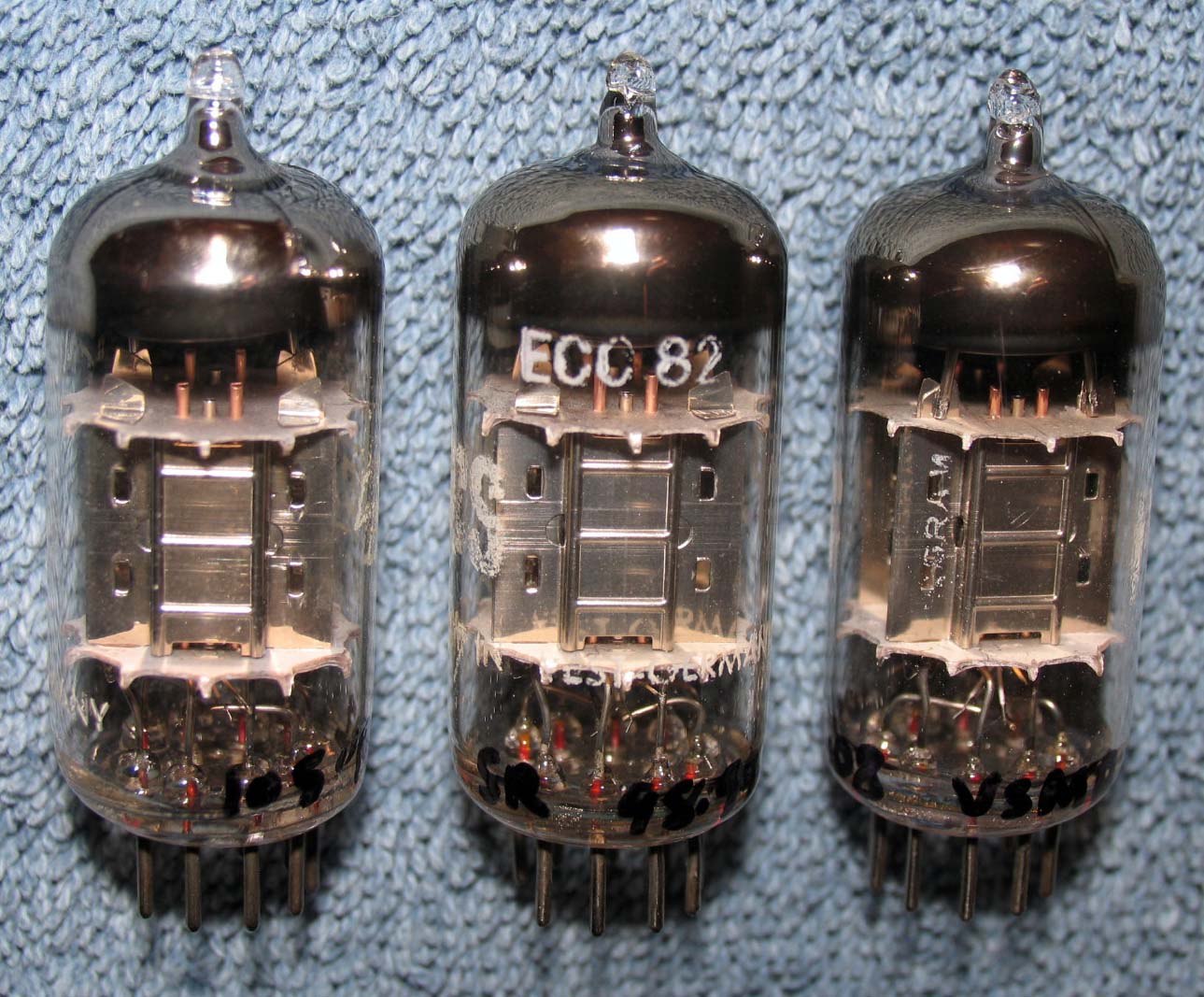
The distinctive “Chrome” or “Silver” plates found on certain Siemens 12AU7 variants were not just an aesthetic choice. This finish was actually a nickel-plated or aluminum-clad steel designed to minimize secondary electron emission and improve heat dissipation. By using these highly reflective, “shiny” materials, Siemens was able to reduce gas release within the vacuum during high-temperature operation. Sonically, this material choice is often credited with giving the tube its signature fast, clean, and shimmering high-frequency extension, as well as its exceptionally low noise floor.
Final Verdict
The Siemens 12AU7 Chrome Plate is a modern audiophile’s dream. It offers superb detail and a delicate, airy midrange that breathes life into contemporary recordings. While it may be too lean for those seeking vintage “syrup,” its German-engineered precision makes it one of the most sophisticated 12AU7 variants available today.
I was giving the Amperex 7316 LP’s a rest (while giving the Valvo LPs another chance) when these showed up in the mail. Slightly used, but test NOS levels and fully balanced, so they were already broken in nicely. Put them in and the first word out of my mouth was “yes!”. Great dynamics, soundstage cohesion that moves with force, very detailed and clear (with good air). Seemingly “neutral”. So I was enjoying them with electronic music. Really, really enjoying them.
Then I put in my favorite live acoustic session and the first word out of my mouth was “no.” Compared to 7316’s, tthe vocals have a slight annoying twang, don’t transport you to the venue with a deep black background, and aren’t as smooth. Not harsh at all, just not smooth like Amperex. So I mixed them with the 7316’s. Sounded fine, but didn’t quite do the trick.
Amazing tubes for certain music. I guess same theme as described above.
quick update: switched things around and put the 7316’s in the 1st position and these in the 2nd and getting an incredibly interesting sonic signature….smooth, yet vibrant with all of the instruments perfectly behaved and sounding sweet; sounds are emerging from more of a “white background” (but not from noise or excessive air) – just really nice to listen to

Wow, what a solid performer. The Siemens 12AU7 Chrome Plates is an absolutely beautiful valve, delivering delicate vocals with a massive amount of detail across the entire audible band. What is truly impressive is that it manages this level of resolution without becoming tiring, a common pitfall for many high-transparency tubes. While it might not reach the surgical transparency of a 6N30P-DR, compared to even the finest 12AU7s, this one is superb.
The midrange is inviting and delicate, paired with a brilliant top-end extension that makes it a clear winner for high-fidelity setups. Is it a perfect tube? Not quite. It is incredible for modern recordings, but when playing music from the 50s and 60s, it lacks the specific “dark” tone and harmonic richness required for that era. For those vintage textures, a Mullard Long Plate or Westinghouse Black Plate would be a more suitable choice, but for clarity and air, the Siemens is hard to beat.
A Legacy of German Engineering: Siemens & Halske
The history of Siemens vacuum tubes is rooted in the legendary Siemens & Halske plant in Munich, Germany. Established as a titan of industrial electronics, Siemens became synonymous with “Post-era” (German Post Office) and military-grade telecommunications equipment. Their tube production was characterized by extreme mechanical precision and a laboratory-like approach to materials. Unlike many manufacturers who prioritized a “lush” sound, Siemens focused on linear frequency response and longevity, making their valves some of the most reliable ever produced in Europe.
The Secret of the Chrome Plates
The distinctive “Chrome” or “Silver” plates found on certain Siemens 12AU7 variants were not just an aesthetic choice. This finish was actually a nickel-plated or aluminum-clad steel designed to minimize secondary electron emission and improve heat dissipation. By using these highly reflective, “shiny” materials, Siemens was able to reduce gas release within the vacuum during high-temperature operation. Sonically, this material choice is often credited with giving the tube its signature fast, clean, and shimmering high-frequency extension, as well as its exceptionally low noise floor.
Final Verdict
The Siemens 12AU7 Chrome Plate is a modern audiophile’s dream. It offers superb detail and a delicate, airy midrange that breathes life into contemporary recordings. While it may be too lean for those seeking vintage “syrup,” its German-engineered precision makes it one of the most sophisticated 12AU7 variants available today.
I was giving the Amperex 7316 LP’s a rest (while giving the Valvo LPs another chance) when these showed up in the mail. Slightly used, but test NOS levels and fully balanced, so they were already broken in nicely. Put them in and the first word out of my mouth was “yes!”. Great dynamics, soundstage cohesion that moves with force, very detailed and clear (with good air). Seemingly “neutral”. So I was enjoying them with electronic music. Really, really enjoying them.
Then I put in my favorite live acoustic session and the first word out of my mouth was “no.” Compared to 7316’s, tthe vocals have a slight annoying twang, don’t transport you to the venue with a deep black background, and aren’t as smooth. Not harsh at all, just not smooth like Amperex. So I mixed them with the 7316’s. Sounded fine, but didn’t quite do the trick.
Amazing tubes for certain music. I guess same theme as described above.
quick update: switched things around and put the 7316’s in the 1st position and these in the 2nd and getting an incredibly interesting sonic signature….smooth, yet vibrant with all of the instruments perfectly behaved and sounding sweet; sounds are emerging from more of a “white background” (but not from noise or excessive air) – just really nice to listen to