No reviews found on the Internet. Read our reviews.
Share this post:
One thought on “Philips ECC40 Wrinkled Glass 1956”
Tube Review: The Hidden Gem of Holland
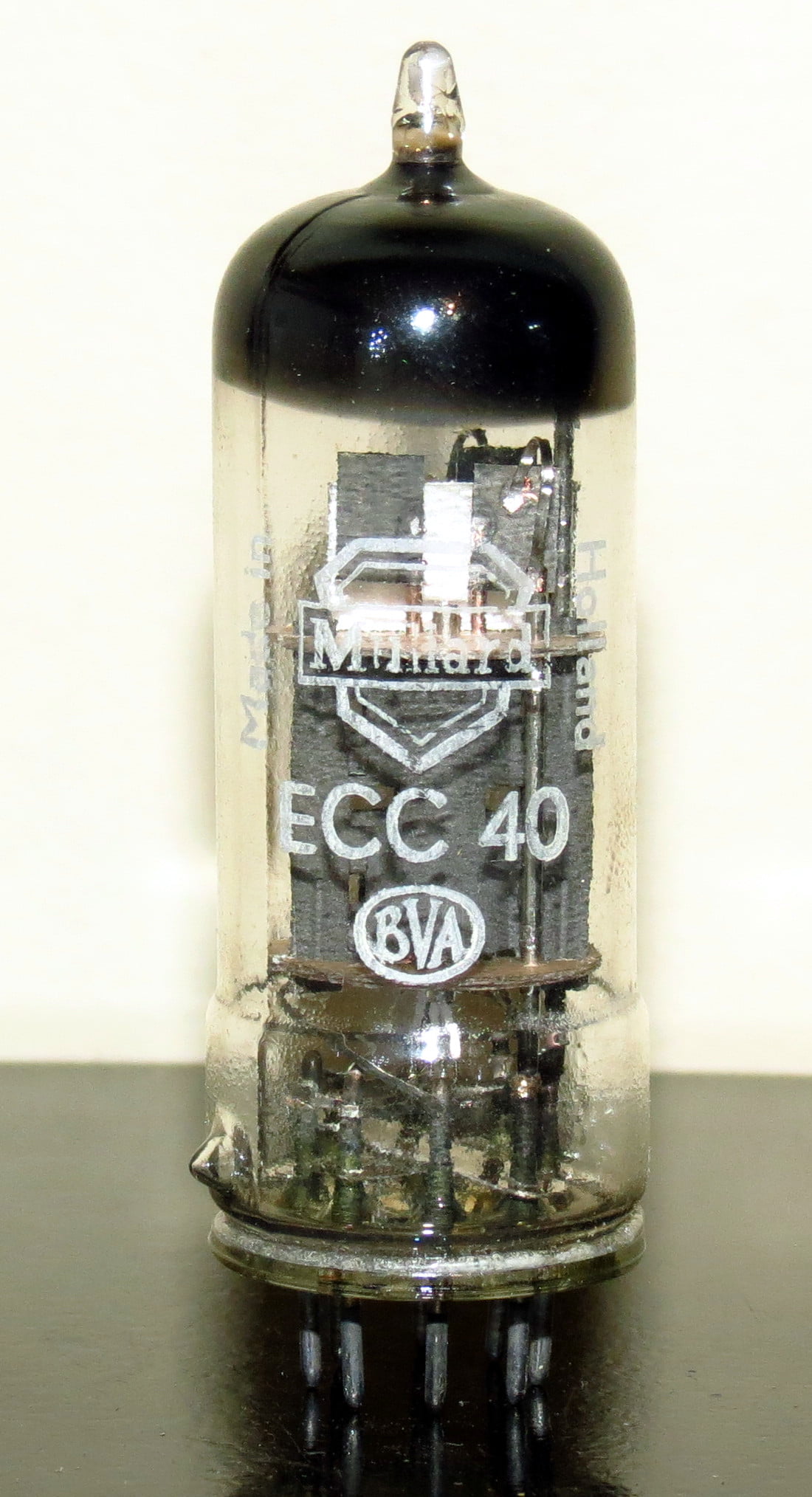
I have to start by saying this is one of my all-time favorite tubes, yet it remains practically unknown to most enthusiasts. While the branding on the glass might say Mullard and BVA, the date code (LC2 +6K) reveals its true heritage: this is a Philips Holland masterpiece.
The build quality is nothing short of fascinating. It features several unique physical characteristics that make it a standout in any collection:
Large Round Foil Getter: This is actually the only tube in my possession that utilizes this specific getter style.
Wrinkled Glass: A rare aesthetic typically reserved for Mullard’s Mitcham production from the mid-1950s.
Unique Base: It sports a robust, fat glass base complete with a glass guiding pin that looks incredibly “cool” compared to standard designs.
Performance & Sound
In terms of sonics, this tube is powerfully dynamic—in fact, it is likely the most dynamic tube I own. Beyond the energy, it delivers a transparent, smooth, and highly musical presentation that breathes life into any recording.
Technical Specs & Compatibility
The ECC40 features a gain of 32, strategically placing it right between a 12AU7 and a 12AT7. Originally designed for audio frequency amplifiers, it was eventually succeeded by the 6SN7. However, with a simple adapter, I have successfully used it to replace both 12AU7 and 12AT7 positions with stunning results.
Final Verdict: An absolute sleeper. If you can find an ECC40 and have the means to adapt it, you will be rewarded with a level of transparency and musicality that rivals the most famous names in the industry.



 (6 votes, average: 3.67 out of 5)
 Loading...
Tube Review: The Hidden Gem of Holland
I have to start by saying this is one of my all-time favorite tubes, yet it remains practically unknown to most enthusiasts. While the branding on the glass might say Mullard and BVA, the date code (LC2 +6K) reveals its true heritage: this is a Philips Holland masterpiece.
The build quality is nothing short of fascinating. It features several unique physical characteristics that make it a standout in any collection:
Performance & Sound
In terms of sonics, this tube is powerfully dynamic—in fact, it is likely the most dynamic tube I own. Beyond the energy, it delivers a transparent, smooth, and highly musical presentation that breathes life into any recording.
Technical Specs & Compatibility
The ECC40 features a gain of 32, strategically placing it right between a 12AU7 and a 12AT7. Originally designed for audio frequency amplifiers, it was eventually succeeded by the 6SN7. However, with a simple adapter, I have successfully used it to replace both 12AU7 and 12AT7 positions with stunning results.
Final Verdict: An absolute sleeper. If you can find an ECC40 and have the means to adapt it, you will be rewarded with a level of transparency and musicality that rivals the most famous names in the industry.