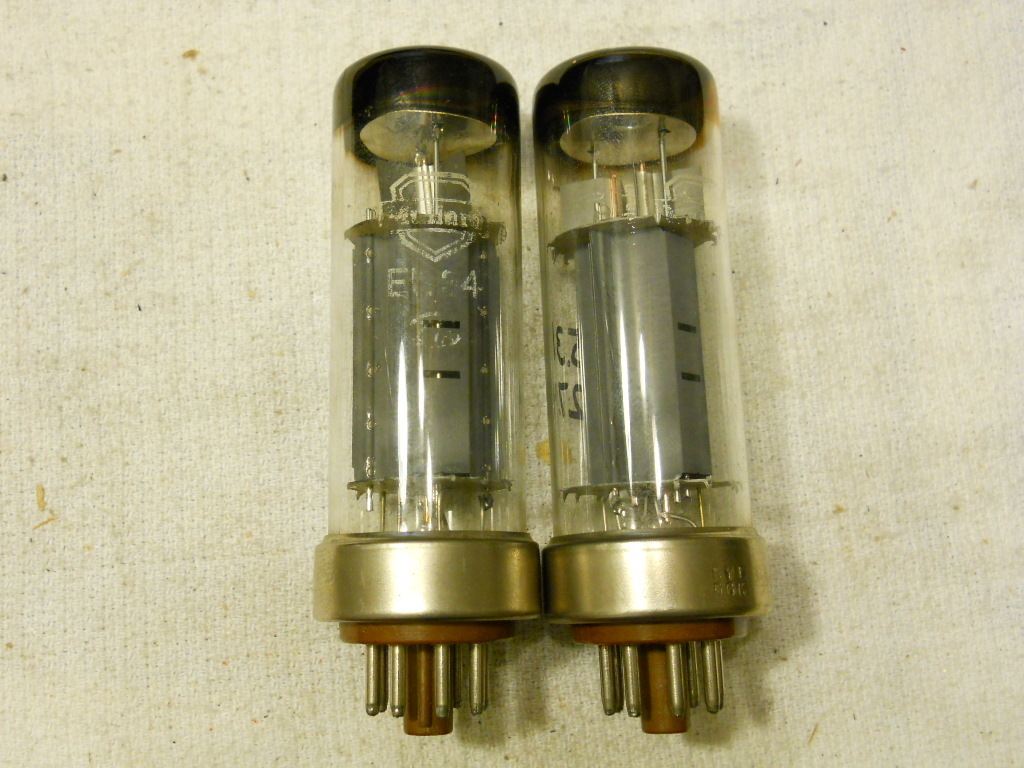
We are discussing one of the most desired output tubes in existence! Why does the Mullard EL34 Metal Base command such a high price, and is it truly worth the investment? To understand its value, we must look at its unique origin: while branded as Mullard, this treasure was actually manufactured by Philips in Holland. While later versions like the xF1 were produced at the famous Blackburn factory, these metal-base variants—also found with Amperex Bugle Boy silk screens—all originate from the same superior Dutch facility.
Sonically, this tube is in a league of its own, particularly when it comes to dynamics, dynamics, and more dynamics! The bass is so tight and powerful that the rhythm carries through effortlessly, making it impossible not to tap your foot along with the music. While it shares the great mids and extended highs of the later Blackburn-made xF1, those later versions simply cannot match the rhythmic drive of the metal base. Even when compared to heavyweights like the Genalex KT66 or RCA 6L6GC black plates, none could replicate this tube’s fantastic, tight low-end. If dynamics are your priority, this is the definitive tube to own. HIGHLY RECOMMENDED.
History of Mullard EL34 Tubes
The Mullard EL34 is perhaps the most iconic power pentode in audio history. Introduced in the early 1950s, it became the heart of the “British Sound,” powering legendary amplifiers from Marshall, Hiwatt, and Vox. The evolution of the tube is typically tracked by its “xf” batch codes. The earliest versions were the metal-base “xf1” prototypes and early production units made by Philips (Mullard’s parent company) in the Netherlands. Production eventually shifted to Mullard’s Blackburn factory in Lancashire, England, where the design transitioned to the resin-based “xf1,” followed by the widely popular “xf2,” and eventually the “xf3” and “xf4” variants. Each generation is prized for its lush midrange, but the early Dutch-made metal-base units remain the ultimate “holy grail” for collectors.
Why Metal Bases Were Used in Tubes
The use of a metal base in early EL34 production served several critical technical purposes. Primarily, the metal ring provided superior structural integrity and acted as a heat sink for the base of the tube, where thermal stress is highest. Additionally, the metal base offered enhanced shielding against electromagnetic interference and helped create a more stable mechanical connection within the socket. As manufacturing processes were optimized for cost-efficiency and mass production, factories transitioned to molded phenolic (plastic) bases, which were cheaper to produce but lacked the rugged, high-performance shielding properties of the original Philips metal-base design.
Final Verdict
The Mullard EL34 Metal Base is the undisputed heavyweight champion of the EL34 world. While its cost is significant, its unrivaled dynamic range and rhythmic precision justify the price for serious audiophiles. It offers a level of visceral impact and bass control that later Blackburn versions simply cannot replicate, making it a mandatory audition for those seeking the pinnacle of vintage vacuum tube performance.



 (17 votes, average: 3.65 out of 5)
 Loading...
We are discussing one of the most desired output tubes in existence! Why does the Mullard EL34 Metal Base command such a high price, and is it truly worth the investment? To understand its value, we must look at its unique origin: while branded as Mullard, this treasure was actually manufactured by Philips in Holland. While later versions like the xF1 were produced at the famous Blackburn factory, these metal-base variants—also found with Amperex Bugle Boy silk screens—all originate from the same superior Dutch facility.
Sonically, this tube is in a league of its own, particularly when it comes to dynamics, dynamics, and more dynamics! The bass is so tight and powerful that the rhythm carries through effortlessly, making it impossible not to tap your foot along with the music. While it shares the great mids and extended highs of the later Blackburn-made xF1, those later versions simply cannot match the rhythmic drive of the metal base. Even when compared to heavyweights like the Genalex KT66 or RCA 6L6GC black plates, none could replicate this tube’s fantastic, tight low-end. If dynamics are your priority, this is the definitive tube to own. HIGHLY RECOMMENDED.
History of Mullard EL34 Tubes
The Mullard EL34 is perhaps the most iconic power pentode in audio history. Introduced in the early 1950s, it became the heart of the “British Sound,” powering legendary amplifiers from Marshall, Hiwatt, and Vox. The evolution of the tube is typically tracked by its “xf” batch codes. The earliest versions were the metal-base “xf1” prototypes and early production units made by Philips (Mullard’s parent company) in the Netherlands. Production eventually shifted to Mullard’s Blackburn factory in Lancashire, England, where the design transitioned to the resin-based “xf1,” followed by the widely popular “xf2,” and eventually the “xf3” and “xf4” variants. Each generation is prized for its lush midrange, but the early Dutch-made metal-base units remain the ultimate “holy grail” for collectors.
Why Metal Bases Were Used in Tubes
The use of a metal base in early EL34 production served several critical technical purposes. Primarily, the metal ring provided superior structural integrity and acted as a heat sink for the base of the tube, where thermal stress is highest. Additionally, the metal base offered enhanced shielding against electromagnetic interference and helped create a more stable mechanical connection within the socket. As manufacturing processes were optimized for cost-efficiency and mass production, factories transitioned to molded phenolic (plastic) bases, which were cheaper to produce but lacked the rugged, high-performance shielding properties of the original Philips metal-base design.
Final Verdict
The Mullard EL34 Metal Base is the undisputed heavyweight champion of the EL34 world. While its cost is significant, its unrivaled dynamic range and rhythmic precision justify the price for serious audiophiles. It offers a level of visceral impact and bass control that later Blackburn versions simply cannot replicate, making it a mandatory audition for those seeking the pinnacle of vintage vacuum tube performance.