“The Mullard beats them all. It just has a lot more “body” to it.” Read
Share this post:
3 thoughts on “Mullard 6080 Mitcham”
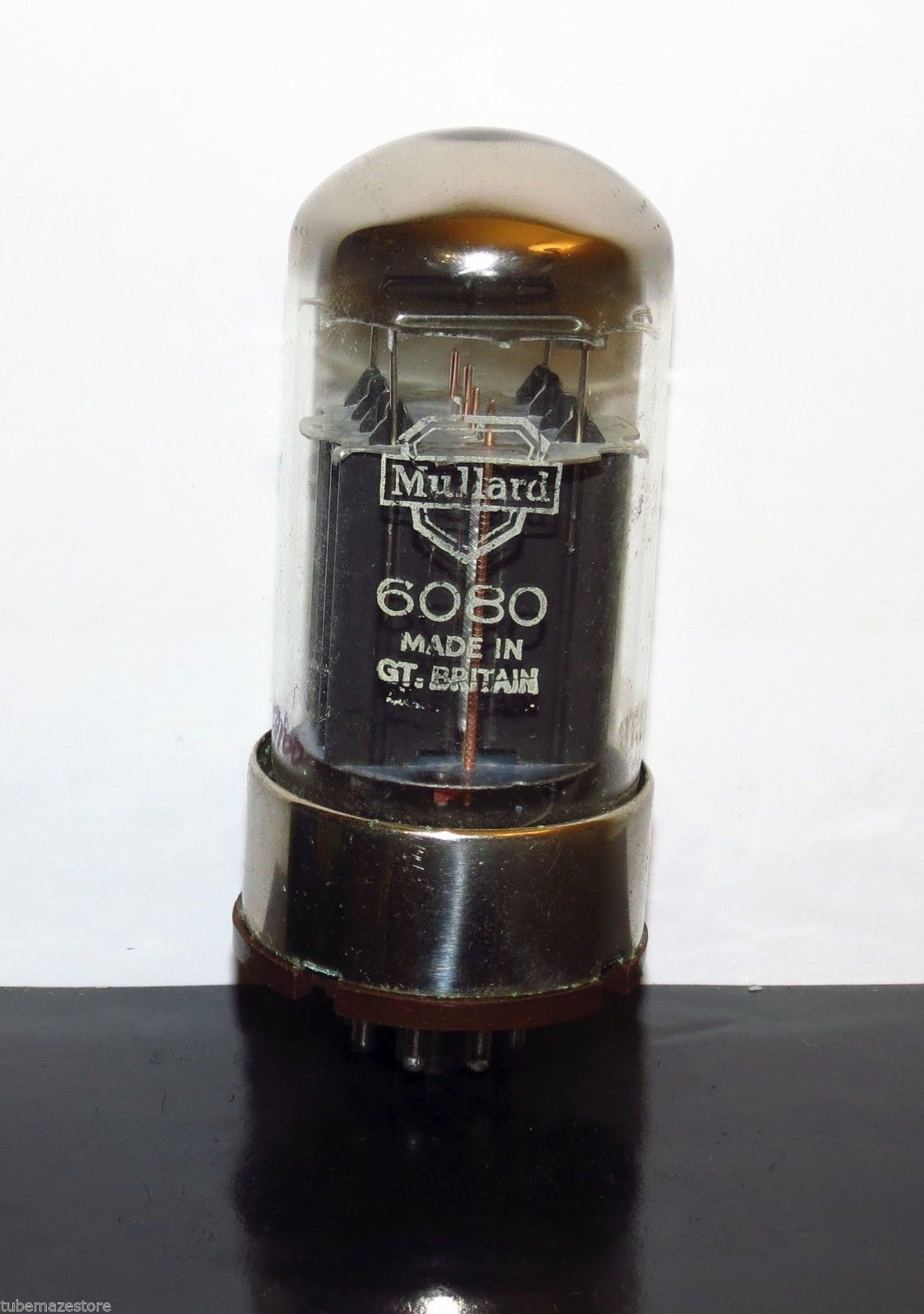
For quite some time, the Tung-Sol 5998 was my mainstay—a truly excellent performer known for its relaxed, airy, and transparent presentation with impressive bass extension. However, everything changed when I secured a few sets of genuine Mullard 6080 tubes. These units are the real deal, featuring the iconic black spiky plates and the “R” factory code, confirming their origin from Great Britain.
Upon plugging them into the amp, the initial sonic impact was so profound it was almost disorienting. After several A/B tests against the Tung-Sol, the conclusion was inescapable: the Mullard simply sounds better. It reproduces the body of the sound with such incredible richness that the Tung-Sol began to sound dry by comparison. While it might concede a microscopic amount of transparency to the 5998, the Mullard compensates with a full, powerful character that has officially made it my new reference tube.
The Mitcham factory, located in Surrey, was a cornerstone of the British electronics industry and one of Mullard’s most vital production hubs. Established in the late 1920s, Mitcham became synonymous with high-end vacuum tube engineering, particularly as the demand for specialized military and telecommunications valves surged during and after World War II.
The factory was assigned the manufacturer code “R” (often seen in the etched date codes on the glass). While Mullard’s Blackburn plant (code “B”) is famous for high-volume audio tubes like the EL34, Mitcham was frequently the site for Special Quality (SQ) tubes and ruggedized versions intended for industrial and government use. The 6080 production at Mitcham is particularly revered by audiophiles because it benefited from these stringent military-grade construction standards, resulting in the “spiky” black plate designs that offer superior heat dissipation and mechanical stability compared to standard commercial alternatives.
Final Verdict
The Mullard 6080 Mitcham is a masterclass in British valve manufacturing. It provides a level of harmonic richness and weight that elevates it above even the most respected American alternatives. For the serious listener, this is a must-own reference grade tube.
I have a Mullard Mitcham rebranded Philips 6080 tube and it sounds weak. This compared to my Philips JAN 6080WC tube, it has better tonality and bass compared to the Mullard made tube.
I know you don’t like the 6080s in general, but everything I’ve read about the Mullard 6080, and based on my own experience, I have a feeling that either your tube is a problem or perhaps there’s something in your chain that doesn’t pair right with the 6080. If I remember correctly, you have a dark voice and use hd650s with it? If so the Mullard should sound just as the author above your post describes. It DOES need to be paired with a bright punchy tube to sound best (my favorite pairings so far have been with a syl vt231, ’52 sylv 6sn7gt, and a Raytheon vt231. On the other hand my two favorite driver tubes at the moment, a tungsram cv1988 and a brimar cv1988 sound uninspiring with the Mullard 6080. All 3 types have that beautiful liquidity that had drawn me to tubes in the first place. I find that when power and driver tubes are too similar in characteristics, they almost drown each other out. The DAC is also crucial..esp with the dark voice. I’m using a NAD D1050 which really makes my set up sing. Anyway, I encourage you to stick with the Mullard. It’s my favorite power tube of late (better than the 5998). A truly magical tube. And completely different than other 6080s which until the Mullard I generally disliked (although the Chatham 6080wc is a very good tube.. but not in the Mullard’s league)

 (22 votes, average: 4.23 out of 5)
 Loading...
For quite some time, the Tung-Sol 5998 was my mainstay—a truly excellent performer known for its relaxed, airy, and transparent presentation with impressive bass extension. However, everything changed when I secured a few sets of genuine Mullard 6080 tubes. These units are the real deal, featuring the iconic black spiky plates and the “R” factory code, confirming their origin from Great Britain.
Upon plugging them into the amp, the initial sonic impact was so profound it was almost disorienting. After several A/B tests against the Tung-Sol, the conclusion was inescapable: the Mullard simply sounds better. It reproduces the body of the sound with such incredible richness that the Tung-Sol began to sound dry by comparison. While it might concede a microscopic amount of transparency to the 5998, the Mullard compensates with a full, powerful character that has officially made it my new reference tube.
The Mitcham factory, located in Surrey, was a cornerstone of the British electronics industry and one of Mullard’s most vital production hubs. Established in the late 1920s, Mitcham became synonymous with high-end vacuum tube engineering, particularly as the demand for specialized military and telecommunications valves surged during and after World War II.
The factory was assigned the manufacturer code “R” (often seen in the etched date codes on the glass). While Mullard’s Blackburn plant (code “B”) is famous for high-volume audio tubes like the EL34, Mitcham was frequently the site for Special Quality (SQ) tubes and ruggedized versions intended for industrial and government use. The 6080 production at Mitcham is particularly revered by audiophiles because it benefited from these stringent military-grade construction standards, resulting in the “spiky” black plate designs that offer superior heat dissipation and mechanical stability compared to standard commercial alternatives.
Final Verdict
The Mullard 6080 Mitcham is a masterclass in British valve manufacturing. It provides a level of harmonic richness and weight that elevates it above even the most respected American alternatives. For the serious listener, this is a must-own reference grade tube.
I have a Mullard Mitcham rebranded Philips 6080 tube and it sounds weak. This compared to my Philips JAN 6080WC tube, it has better tonality and bass compared to the Mullard made tube.
Hey
I know you don’t like the 6080s in general, but everything I’ve read about the Mullard 6080, and based on my own experience, I have a feeling that either your tube is a problem or perhaps there’s something in your chain that doesn’t pair right with the 6080. If I remember correctly, you have a dark voice and use hd650s with it? If so the Mullard should sound just as the author above your post describes. It DOES need to be paired with a bright punchy tube to sound best (my favorite pairings so far have been with a syl vt231, ’52 sylv 6sn7gt, and a Raytheon vt231. On the other hand my two favorite driver tubes at the moment, a tungsram cv1988 and a brimar cv1988 sound uninspiring with the Mullard 6080. All 3 types have that beautiful liquidity that had drawn me to tubes in the first place. I find that when power and driver tubes are too similar in characteristics, they almost drown each other out. The DAC is also crucial..esp with the dark voice. I’m using a NAD D1050 which really makes my set up sing. Anyway, I encourage you to stick with the Mullard. It’s my favorite power tube of late (better than the 5998). A truly magical tube. And completely different than other 6080s which until the Mullard I generally disliked (although the Chatham 6080wc is a very good tube.. but not in the Mullard’s league)