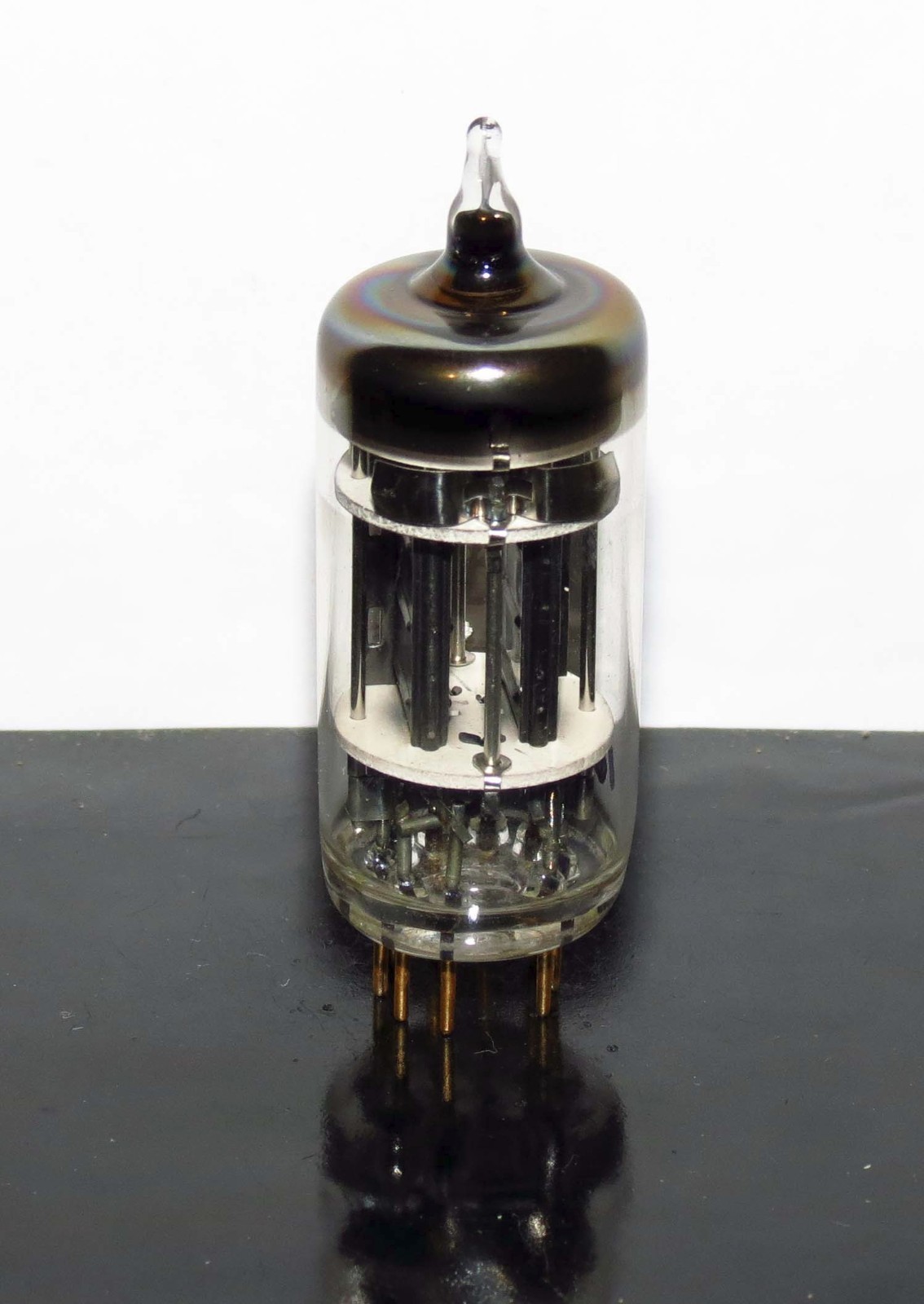
I was finally able to get my hands on the coveted Bendix 6900 Triple Mica Gold Pins. This tube is a drop-in replacement for the 5687 and 7119 family of valves, meaning it can be utilized in a vast array of audio equipment, both vintage and modern. Visually, the tube is a masterpiece; one look confirms that no expense was spared in its construction. It features heavy-duty support rods to eliminate microphonics, ceramic spacers, a triple mica structure, and beautiful gold pins.
When it comes to sound, transparency is the key, and the Bendix 6900 delivers it in spades. There isn’t even a hint of a veil; the quietest details come through brilliantly, from the stretching of a drumhead to the subtle breath of a vocalist. The bass is strong and precise with zero mud. Most impressively, this is the smoothest sounding tube I have ever encountered. There is absolutely no grain in the sound, forcing me to re-listen to my favorite compositions just to hear them anew. If your equipment supports this tube, it is a definitive HIGHLY RECOMMENDED.
History of Bendix Red Bank Tubes
The “Red Bank” division of the Bendix Aviation Corporation, located in New Jersey, was a specialized facility dedicated to pushing vacuum tube technology to its absolute physical limits. Unlike consumer-grade factories, Red Bank was tasked with creating “Special Purpose” tubes for the U.S. military and aerospace programs during the Cold War. These tubes were engineered to function inside missiles, jet engines, and radar systems where standard glass would simply shatter or fail.
The Bendix Red Bank philosophy was one of “over-engineering.” They utilized hard glass (Nonex), which required higher firing temperatures, and internal components made of high-purity materials like tungsten and molybdenum. Because these tubes were built for extreme environments, their longevity in a home audio setting is legendary—often rated for 10,000 to 20,000 hours of service, effectively lasting a lifetime for the average audiophile.
Why the 6900 is Considered a Special Tube
The 6900 is regarded as a “super-tube” primarily because it is a ruggedized, high-performance evolution of the 5687. What makes it special is the combination of its extreme mechanical rigidity and its electrical stability. The inclusion of ceramic spacers instead of traditional mica in key areas helps to insulate the elements at much higher temperatures and reduces leakage current to nearly zero.
Furthermore, the 6900 possesses a unique internal architecture designed to withstand up to 500G of shock. In high-end audio, this translates to a tube with unmatched immunity to microphonics and a “black” background that allows micro-details to emerge without interference. It is effectively the ultimate version of its circuit type, representing the pinnacle of American vacuum tube manufacturing before the industry pivoted toward transistors.
Final Verdict
The Bendix 6900 is quite simply the finest 5687 variant ever produced. While it was originally designed for missiles and radar, its grain-free smoothness and surgical transparency make it a holy grail for the most demanding audio systems. If you can justify the investment, it is the final word in performance.
Nick stirred me to the site and I just had to put my 2 cents. I have Master Sound 300B SE tube. I decided to upgrade to 6900 at a crazy price, I might add, but the result was, not to overstate absolutely crazy. The smoothness and resolution it added was just mind boggling. The tube transformed my amp into a something else. Smoothness that it added was just uncanny. This is my absolutely favorite tube. For preamp tube I use Amperex 7316 long plate tubes.


 (22 votes, average: 4.14 out of 5)
 Loading...
I was finally able to get my hands on the coveted Bendix 6900 Triple Mica Gold Pins. This tube is a drop-in replacement for the 5687 and 7119 family of valves, meaning it can be utilized in a vast array of audio equipment, both vintage and modern. Visually, the tube is a masterpiece; one look confirms that no expense was spared in its construction. It features heavy-duty support rods to eliminate microphonics, ceramic spacers, a triple mica structure, and beautiful gold pins.
When it comes to sound, transparency is the key, and the Bendix 6900 delivers it in spades. There isn’t even a hint of a veil; the quietest details come through brilliantly, from the stretching of a drumhead to the subtle breath of a vocalist. The bass is strong and precise with zero mud. Most impressively, this is the smoothest sounding tube I have ever encountered. There is absolutely no grain in the sound, forcing me to re-listen to my favorite compositions just to hear them anew. If your equipment supports this tube, it is a definitive HIGHLY RECOMMENDED.
History of Bendix Red Bank Tubes
The “Red Bank” division of the Bendix Aviation Corporation, located in New Jersey, was a specialized facility dedicated to pushing vacuum tube technology to its absolute physical limits. Unlike consumer-grade factories, Red Bank was tasked with creating “Special Purpose” tubes for the U.S. military and aerospace programs during the Cold War. These tubes were engineered to function inside missiles, jet engines, and radar systems where standard glass would simply shatter or fail.
The Bendix Red Bank philosophy was one of “over-engineering.” They utilized hard glass (Nonex), which required higher firing temperatures, and internal components made of high-purity materials like tungsten and molybdenum. Because these tubes were built for extreme environments, their longevity in a home audio setting is legendary—often rated for 10,000 to 20,000 hours of service, effectively lasting a lifetime for the average audiophile.
Why the 6900 is Considered a Special Tube
The 6900 is regarded as a “super-tube” primarily because it is a ruggedized, high-performance evolution of the 5687. What makes it special is the combination of its extreme mechanical rigidity and its electrical stability. The inclusion of ceramic spacers instead of traditional mica in key areas helps to insulate the elements at much higher temperatures and reduces leakage current to nearly zero.
Furthermore, the 6900 possesses a unique internal architecture designed to withstand up to 500G of shock. In high-end audio, this translates to a tube with unmatched immunity to microphonics and a “black” background that allows micro-details to emerge without interference. It is effectively the ultimate version of its circuit type, representing the pinnacle of American vacuum tube manufacturing before the industry pivoted toward transistors.
Final Verdict
The Bendix 6900 is quite simply the finest 5687 variant ever produced. While it was originally designed for missiles and radar, its grain-free smoothness and surgical transparency make it a holy grail for the most demanding audio systems. If you can justify the investment, it is the final word in performance.
Great post on Bendix 6900 tubes:
http://www.audioasylum.com/forums/prophead/messages/2/26915.html
Nick stirred me to the site and I just had to put my 2 cents. I have Master Sound 300B SE tube. I decided to upgrade to 6900 at a crazy price, I might add, but the result was, not to overstate absolutely crazy. The smoothness and resolution it added was just mind boggling. The tube transformed my amp into a something else. Smoothness that it added was just uncanny. This is my absolutely favorite tube. For preamp tube I use Amperex 7316 long plate tubes.