“The long plate tube pretty much sounds like a long plate Amperex 12AU7/ECC82 of the same vintage, which is softer/more lush.” Read
“The Amperex 7316s don’t sound as good as the much more common and real world priced Siemens 12AU7s in my amp” Read
Share this post:
2 thoughts on “Amperex 7316 Long Plates Foil Getter”
After spending some quality time with the Amperex 7316 Long Plates (D-getter Foil), I can confidently say these are some of the finest tubes I’ve ever had the pleasure of hearing—and keep in mind, I’ve rolled just about everything out there.
During a two-hour session comparing them to the Amperex 12AU7 Bugle Boy Long Foils, the 7316 gradually revealed its superiority. While it wasn’t immediately obvious, the 7316 eventually made the 12AU7—a tube I previously loved—sound almost ordinary. The phenomenal undertones and the extraordinary gentleness with which it handles female vocals are simply unbelievable. The detail retrieval is through the roof; I was discovering subtle passages in tracks I’ve heard hundreds of times before.
Compared to a standard 12AU7, the 7316 offers significantly more air and a perfectly balanced bass. While it doesn’t have the heavy, pronounced low-end of a Mullard or RCA Black Plate, its lighter, more refined touch is far more accurate to my ears. We even conducted a blind test between 1958 Heerlen-made Mullard 12AU7 LP, Amperex 12AU7 LP, and the 7316 LP; the 7316 was easily distinguishable, debunking the myth that these tubes sound identical to their 12AU7 cousins.
The 7316 is often considered the “Holy Grail” of the 12AU7 family. Originally designed for high-reliability industrial and computer applications, it was built to stricter tolerances with superior materials compared to standard consumer tubes. In the world of high-fidelity audio, this translates to an exceptionally low noise floor and a lifelike transparency that standard 12AU7s struggle to match. Its rarity, particularly the early long-plate foil getter versions, makes it one of the most sought-after upgrades for audiophiles looking to maximize the soundstage and micro-detail of their preamps.
Final Verdict: If you find a pair of these at a decent price—even if it’s 2 AM—buy them immediately. This is quite likely the last tube you will ever feel the need to roll.
I was listening to the “Bugle Boy 12au7 Long Plate D Getter w/ Foil Strip” fora bout a week before swapping the 7316 long plates in. The first thing that grabbed me really was they sounded more agile, more musical, and a quieter background. Then as I sat for a while, started to notice the increase in air and detail, as well as a taller soundstage. The inner detail, and the ability for images fade in and out beautifully, adds to magic.
I think they’re king of the 12au7 tube type. The way voices extend and soar all the way through to the very end without a single negative characteristic is a thing of beauty. Not only do they soar out into the room, they do so with body and thickness (not thin and airy like some of the better known german tubes).
I have the Mazda Chrome Plate and the Siemens (the good ones) on the way. Not expecting them to beat these out. Might mix them in for something interesting, but we’ll see.
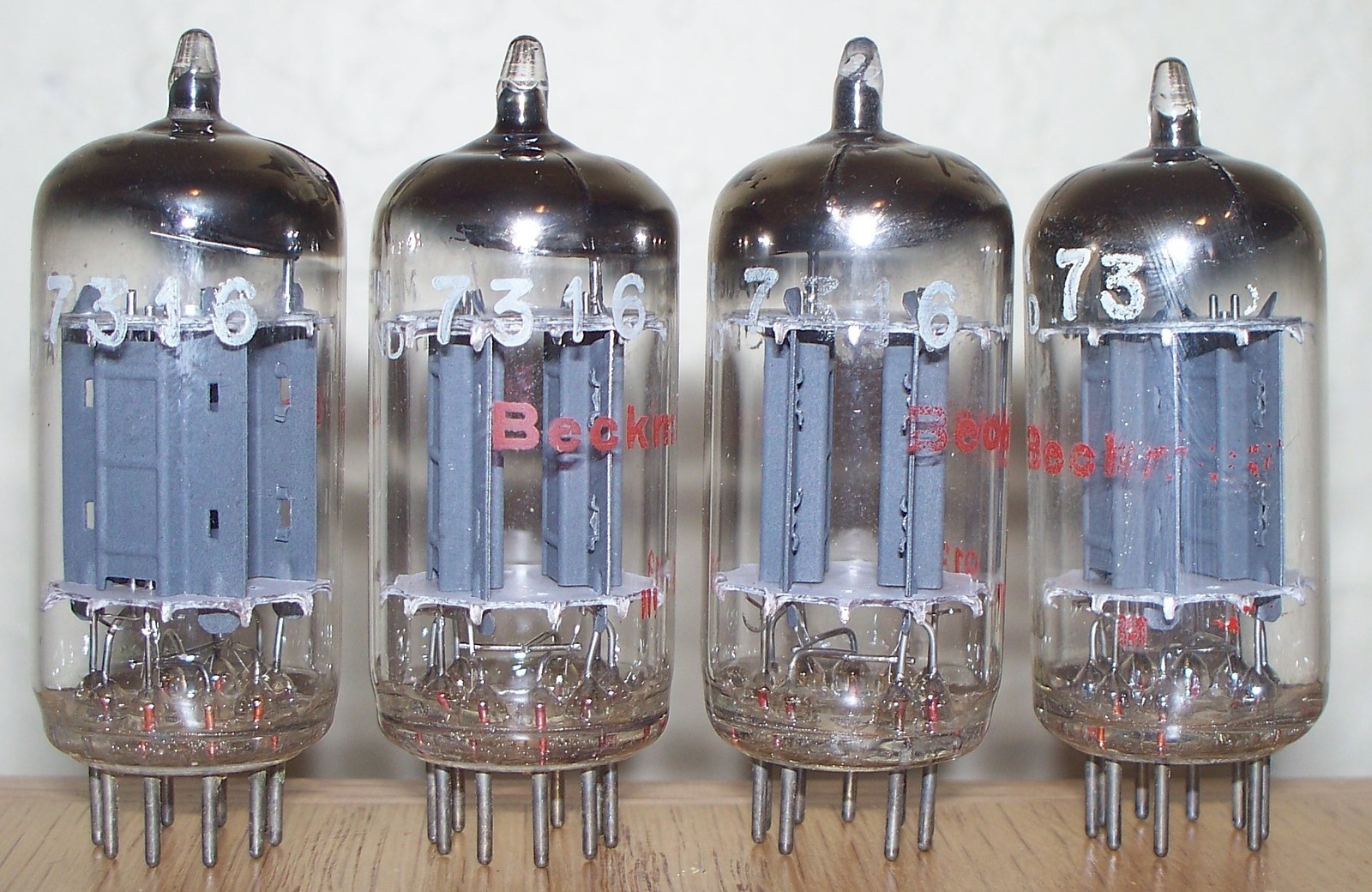

After spending some quality time with the Amperex 7316 Long Plates (D-getter Foil), I can confidently say these are some of the finest tubes I’ve ever had the pleasure of hearing—and keep in mind, I’ve rolled just about everything out there.
During a two-hour session comparing them to the Amperex 12AU7 Bugle Boy Long Foils, the 7316 gradually revealed its superiority. While it wasn’t immediately obvious, the 7316 eventually made the 12AU7—a tube I previously loved—sound almost ordinary. The phenomenal undertones and the extraordinary gentleness with which it handles female vocals are simply unbelievable. The detail retrieval is through the roof; I was discovering subtle passages in tracks I’ve heard hundreds of times before.
Compared to a standard 12AU7, the 7316 offers significantly more air and a perfectly balanced bass. While it doesn’t have the heavy, pronounced low-end of a Mullard or RCA Black Plate, its lighter, more refined touch is far more accurate to my ears. We even conducted a blind test between 1958 Heerlen-made Mullard 12AU7 LP, Amperex 12AU7 LP, and the 7316 LP; the 7316 was easily distinguishable, debunking the myth that these tubes sound identical to their 12AU7 cousins.
The 7316 is often considered the “Holy Grail” of the 12AU7 family. Originally designed for high-reliability industrial and computer applications, it was built to stricter tolerances with superior materials compared to standard consumer tubes. In the world of high-fidelity audio, this translates to an exceptionally low noise floor and a lifelike transparency that standard 12AU7s struggle to match. Its rarity, particularly the early long-plate foil getter versions, makes it one of the most sought-after upgrades for audiophiles looking to maximize the soundstage and micro-detail of their preamps.
Final Verdict: If you find a pair of these at a decent price—even if it’s 2 AM—buy them immediately. This is quite likely the last tube you will ever feel the need to roll.
I was listening to the “Bugle Boy 12au7 Long Plate D Getter w/ Foil Strip” fora bout a week before swapping the 7316 long plates in. The first thing that grabbed me really was they sounded more agile, more musical, and a quieter background. Then as I sat for a while, started to notice the increase in air and detail, as well as a taller soundstage. The inner detail, and the ability for images fade in and out beautifully, adds to magic.
I think they’re king of the 12au7 tube type. The way voices extend and soar all the way through to the very end without a single negative characteristic is a thing of beauty. Not only do they soar out into the room, they do so with body and thickness (not thin and airy like some of the better known german tubes).
I have the Mazda Chrome Plate and the Siemens (the good ones) on the way. Not expecting them to beat these out. Might mix them in for something interesting, but we’ll see.