

 (17 votes, average: 4.18 out of 5)
 Loading...
“… I don’t like the clean sound, too much bottom. The rhythm is a lot better, the mid’s a little mushy but not hollow at all…. ” Read
“Tunsgrams are ok, they are most certainly better than any of the new production stuff” Read
Even after sampling countless tubes, there are still some that manage to catch you off guard. The Tungsram 12AX7 is one of those rare surprises. While many tubes strive for technical perfection, this one prioritizes the rhythm and groove. It has a way of making you tap your foot the second the music starts.
The standout feature is a strongly pronounced mid-bass that drives the energy of every track. Is it the most accurate tube on the market? No. It isn’t the king of deep bass, the mids can be slightly unrefined, and the high frequencies carry a bit of a sharp edge. However, it possesses a unique “club house” quality that is hard to find elsewhere—it simply kicks you into gear and makes you want to move. If you are looking for a tube that values musicality and momentum over clinical precision, this is a fantastic choice.
Final Verdict: A highly recommended, high-energy performer that sacrifices total transparency for a infectious, foot-tapping groove.
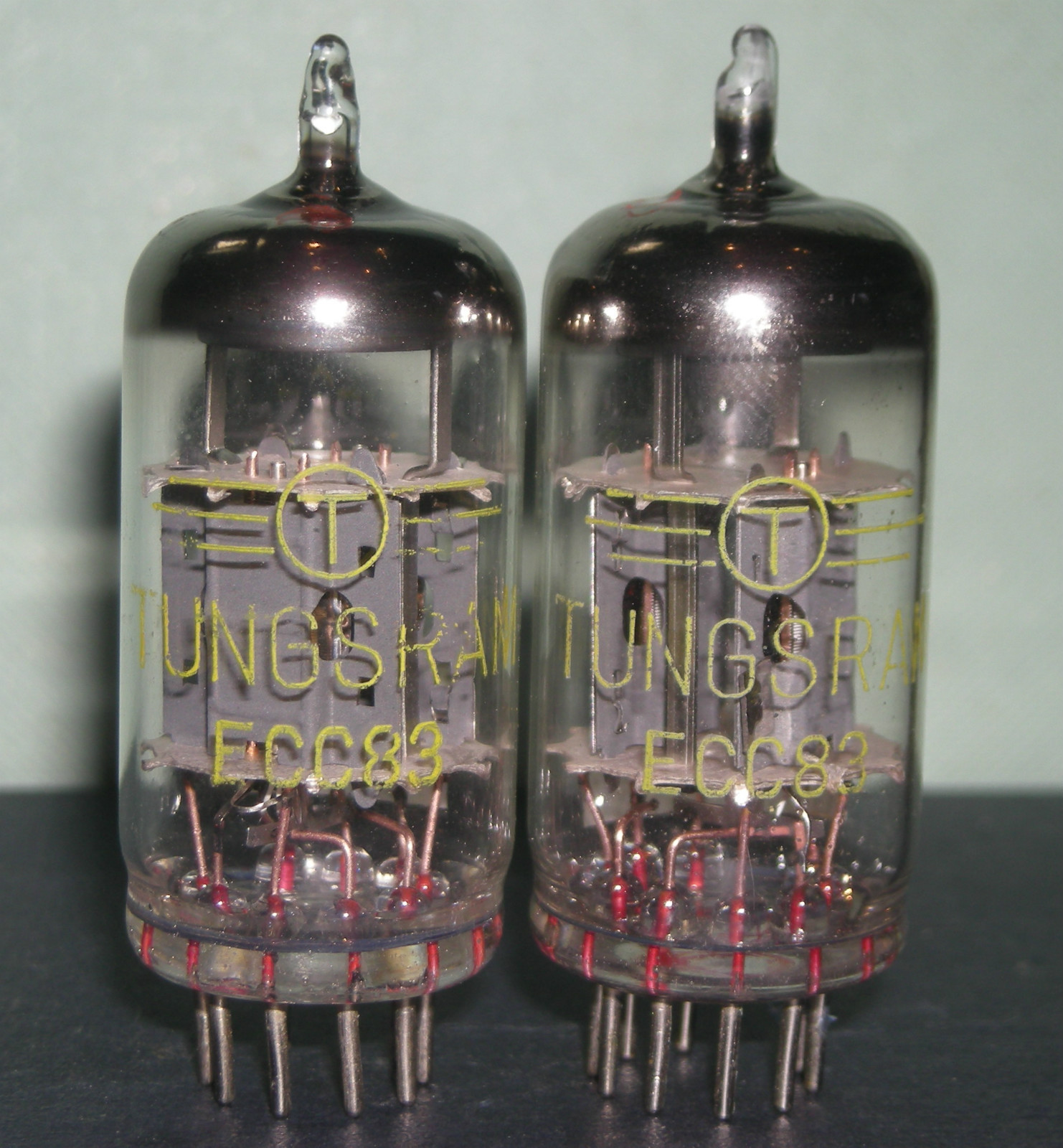
It is hard to speak in absolute terms about Tungsram ECC83s because there IS NOT a Single “Tungsram ECC83”– there is a family or GROUP of them, with variations of construction and especially different years of manufacture of Tungsram ECC83 tubes, causing radical differences in the sound of “Tungsram ECC83s” we are discussing. Tungsram ECC83s made from the mid 1960s to approx. 1972 are very musical, sonically neutral, high resolution, almost “German” sounding ECC83s (that is a compliment!). Many of these EARLY Tungsrams have welded rather than crimped plates and the very best have red serial numbers on the side of the tube (these are selected, special military/scientific grade ECC83) The early vintage Tungsrams have, like 1960s Dutch Philips/Amperex, treble that is phenomenally well-detailed, with a sense of “air” and space around each instrument; they reach from deepest rock-solid bass to the highest highs without ever becoming shrill or fatiguing. I like 1965-1972 Tungsram ECC83s very much; A bit like a Dutch Amperex and a Mullard ECC83 crossed with each other. Most of these early Tungsrams have soft, bright silver molybdenum pins. More common on the NOS ECC83 market, though, are the LATER Tungsram ECC83s, the 1972-1985 Tungsrams. These always have crimped plates. Whereas the earlier Tungsrams have warm, textured lower midrange and neutral sonics, later Tungsrams turn that sound on its head and produce a dry, slightly cold treble and a rather flat, un-involving midrange. They are still good ECC83s, but nothing like the welded plate or red serial number version 1965-1972 Tungsrams. SO– to get the “good Tungsrams”, do your research, ask questions on the tube forums on the net, and buy from tube dealers you trust. BTW– ALL Tungsrams have a small metal tag inside, welded to a plate post usually, with a two digit number stamped into it. Look for the metal tag and you have a Tungsram! I recommend later production Tungsrams for vintage preamps like Dynaco PAS that are slightly “soft” or overly “tubey” sounding; they will balance the overall sound nicely.