3 thoughts on “Tung-Sol 6SN7GT Round Black Plates”
We’re kicking off our deep dive into the legendary Tung-Sol 6SN7 series. These tubes carry a reputation for being astronomically expensive, yet supposedly “top tier” in the audiophile world. But after putting them to the test, do they actually live up to the hype?
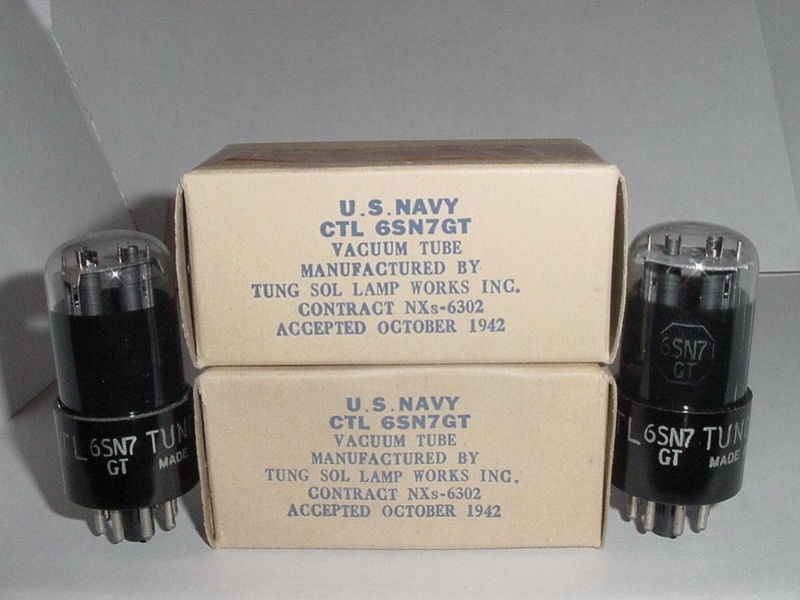
The specific specimen on the bench is a 1948 production 6SN7GT featuring the iconic black glass and round black plates (often confused with oval), complete with VT-231 military markings. Historically, Tung-Sol utilized round plates because the circular geometry provided superior structural rigidity, significantly reducing microphonics and mechanical vibration compared to standard flat plates. The black glass (carbonized coating) wasn’t just for aesthetics; it was designed to shield the tube from stray electrons and improve heat dissipation, ensuring a cleaner signal.
As for the performance, the sound is certainly “great,” but I’ll be honest: I wasn’t blown away. The most glaring issue is a premature high-frequency roll-off. In certain tracks, cymbals lose their shimmer and become difficult to distinguish. This lack of top-end extension means you lose that sense of “air” and holographic space that other Tung-Sol variants provide.
However, if you are a bass-head, this is your holy grail. The low-end response is absolutely unmatched—deep, textured, and authoritative. The overall signature is warm and open, making it a perfect “fix” for systems that are overly bright or fatiguing. That said, given the astronomical market price and the muted treble, it’s a difficult pill to swallow.
Final Verdict: While the build quality is legendary and the bass is world-class, the lack of treble sparkle makes the high price tag hard to justify. It’s a specialized tool for taming bright systems, but it didn’t quite make my world spin.
Tubemaze– You may wish to give these noble roundplate vacuum tubes a 2nd chance; let them burn-in for a few days to a week, running AT LEAST 8 hours a day, maybe with CD player on repeat, or MP3 player connected to provide input signal. I have found that these old RoundPlate Tung Sol 6SN7s often need some extended usage to “wake up” the cathode and strip off the oxidized layer of barium on the cathode to get down to the strongly emitting layers of cathode emulsion. Before an extended “burn in” or “wake up” period, the roundplate 6SN7s are a little bit sluggish-sounding, and sound a little bit muddled/muddy, and in particular do not have good treble extrension or “air” in the high frequencies. But.. oh, WOW, when these legendary roundplate TungSol 6SN7s DO wake up after some burn in time… they will absolutely blow you away. They combine the midrange layering and dimensionality of the Brimar CV1988 with the sparkle and air on top in the extreme treble response that usually is heard only in the Sylvania 6SN7 W (black base, NOT metal base!!) But it is the midrange that is where the roundplate TungSol 6SN7 makes magic happen. It is difficult to describe; the roundplate 6SN7 by TungSol has such incredible 3-D imaging/soundstaging and such natural, musical timbre in the all-important midrange that it makes it very hard to go back to any other 6SN7 after you have spent a few weeks with the roundplate TungSol. This is my favorite 6SN7 tube… followed by the black base Sylvania 6SN7 W from 1943-1945. After that, there are a lot of 6SN7s that are notable for one or another excellent qualities; the early Sylvanias— Sylvania VT 231, 6SN7W, even the slightly later tall bottle 6SN7 GT– all these typically are the best choice for air and extension in the treble (I call them the Dutch Amperex ECC83 of the 6SN7 world as far as excellence in treble response!) The early gray glass RCAs, especially their VT 231 have excellent balance from top to bottom sonically; they are a very BALANCED sonic signature tube , with excellent, smooth treble and SOLID bass that works well in just about all circuits. I think the black glass Ken Rad 6SN7s are a bit over-rated; they are good but nothing all THAT special. The Ken Rad IS pretty good, please do not think I am saying to avoid Ken Rad… it just is too much money for the merely “good” performance it delivers. The best “families” of 6SN7s are (by far) Sylvania and Tung Sol; even the super common Sylvania 6SN7 GTA “Chrome dome” still has very nice treble and upper midrange and can be had for LOW cost on e*ay. Tung Sol is the other great family of 6SN7s; almost all are worthwhile… and the roundplate is as good for a 6SN7 as the Western Electric 300B is for the 300B family (if that makes sense! Both are “best of breed” types. Love them! BTW– in the right circuit, the RCA red base 5692 is another truly “magical” 6SN7.. but in the wrong circuit or in equipment not optimized for 5692… they can be bloated or “tubby” sounding. But Red Base RCA 5692 is one of the great 6SN7s too!
@ eicoeico Thank you! I have been having similar issues with my Tung Sol RP BG, could not understand it. I ended up doing as suggested and put them on a week of 24/7 burn in. To my delight they improved markedly. I compared 5 different 6SN7 varieties including the Ken Rad and the TS RP BG came out on top with the Ken Rad 2nd from the bottom.



 Loading...
We’re kicking off our deep dive into the legendary Tung-Sol 6SN7 series. These tubes carry a reputation for being astronomically expensive, yet supposedly “top tier” in the audiophile world. But after putting them to the test, do they actually live up to the hype?
The specific specimen on the bench is a 1948 production 6SN7GT featuring the iconic black glass and round black plates (often confused with oval), complete with VT-231 military markings. Historically, Tung-Sol utilized round plates because the circular geometry provided superior structural rigidity, significantly reducing microphonics and mechanical vibration compared to standard flat plates. The black glass (carbonized coating) wasn’t just for aesthetics; it was designed to shield the tube from stray electrons and improve heat dissipation, ensuring a cleaner signal.
As for the performance, the sound is certainly “great,” but I’ll be honest: I wasn’t blown away. The most glaring issue is a premature high-frequency roll-off. In certain tracks, cymbals lose their shimmer and become difficult to distinguish. This lack of top-end extension means you lose that sense of “air” and holographic space that other Tung-Sol variants provide.
However, if you are a bass-head, this is your holy grail. The low-end response is absolutely unmatched—deep, textured, and authoritative. The overall signature is warm and open, making it a perfect “fix” for systems that are overly bright or fatiguing. That said, given the astronomical market price and the muted treble, it’s a difficult pill to swallow.
Final Verdict: While the build quality is legendary and the bass is world-class, the lack of treble sparkle makes the high price tag hard to justify. It’s a specialized tool for taming bright systems, but it didn’t quite make my world spin.
Tubemaze– You may wish to give these noble roundplate vacuum tubes a 2nd chance; let them burn-in for a few days to a week, running AT LEAST 8 hours a day, maybe with CD player on repeat, or MP3 player connected to provide input signal. I have found that these old RoundPlate Tung Sol 6SN7s often need some extended usage to “wake up” the cathode and strip off the oxidized layer of barium on the cathode to get down to the strongly emitting layers of cathode emulsion. Before an extended “burn in” or “wake up” period, the roundplate 6SN7s are a little bit sluggish-sounding, and sound a little bit muddled/muddy, and in particular do not have good treble extrension or “air” in the high frequencies. But.. oh, WOW, when these legendary roundplate TungSol 6SN7s DO wake up after some burn in time… they will absolutely blow you away. They combine the midrange layering and dimensionality of the Brimar CV1988 with the sparkle and air on top in the extreme treble response that usually is heard only in the Sylvania 6SN7 W (black base, NOT metal base!!) But it is the midrange that is where the roundplate TungSol 6SN7 makes magic happen. It is difficult to describe; the roundplate 6SN7 by TungSol has such incredible 3-D imaging/soundstaging and such natural, musical timbre in the all-important midrange that it makes it very hard to go back to any other 6SN7 after you have spent a few weeks with the roundplate TungSol. This is my favorite 6SN7 tube… followed by the black base Sylvania 6SN7 W from 1943-1945. After that, there are a lot of 6SN7s that are notable for one or another excellent qualities; the early Sylvanias— Sylvania VT 231, 6SN7W, even the slightly later tall bottle 6SN7 GT– all these typically are the best choice for air and extension in the treble (I call them the Dutch Amperex ECC83 of the 6SN7 world as far as excellence in treble response!) The early gray glass RCAs, especially their VT 231 have excellent balance from top to bottom sonically; they are a very BALANCED sonic signature tube , with excellent, smooth treble and SOLID bass that works well in just about all circuits. I think the black glass Ken Rad 6SN7s are a bit over-rated; they are good but nothing all THAT special. The Ken Rad IS pretty good, please do not think I am saying to avoid Ken Rad… it just is too much money for the merely “good” performance it delivers. The best “families” of 6SN7s are (by far) Sylvania and Tung Sol; even the super common Sylvania 6SN7 GTA “Chrome dome” still has very nice treble and upper midrange and can be had for LOW cost on e*ay. Tung Sol is the other great family of 6SN7s; almost all are worthwhile… and the roundplate is as good for a 6SN7 as the Western Electric 300B is for the 300B family (if that makes sense! Both are “best of breed” types. Love them! BTW– in the right circuit, the RCA red base 5692 is another truly “magical” 6SN7.. but in the wrong circuit or in equipment not optimized for 5692… they can be bloated or “tubby” sounding. But Red Base RCA 5692 is one of the great 6SN7s too!
@ eicoeico Thank you! I have been having similar issues with my Tung Sol RP BG, could not understand it. I ended up doing as suggested and put them on a week of 24/7 burn in. To my delight they improved markedly. I compared 5 different 6SN7 varieties including the Ken Rad and the TS RP BG came out on top with the Ken Rad 2nd from the bottom.