

 (14 votes, average: 4.57 out of 5)
 Loading...
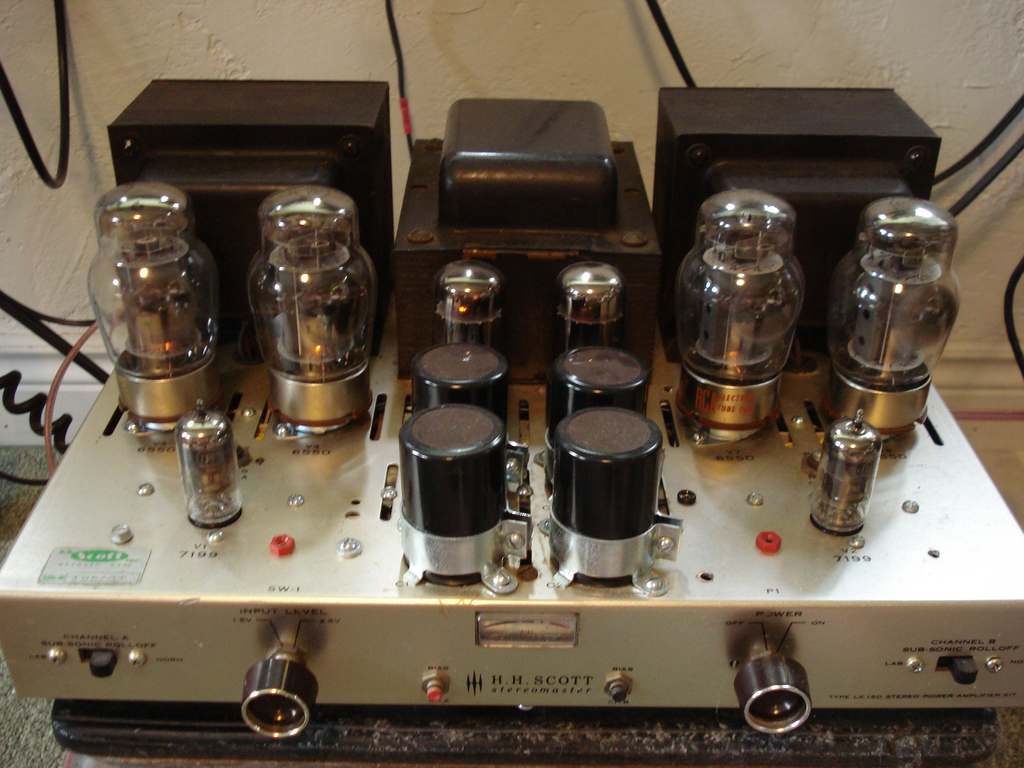
The H.H. Scott LK-150 is a truly captivating piece of high-fidelity engineering. Aesthetically and physically, the amplifier is a marvel; its output transformers are exceptionally large—surpassing even those of the McIntosh MC 275—and are arguably the most substantial ever utilized in a KT88-based design. Following a restoration that included replacing the original capacitors with Solen FastCaps, the performance was immediate and arresting. Despite the use of relatively budget-friendly components, the LK-150 manages to outperform the MC 275 in several key sonic categories.
While the low-frequency response may not offer the absolute tightness and control found in the industry’s top-tier modern amplifiers, it remains highly capable. The sheer scale of the transformers allows for profound bass extension, ensuring a solid foundation even if it lacks ultimate surgical precision.
The <strong>midrange and vocal reproduction</strong> are the hallmark of this amplifier. The delivery is remarkably smooth and fatigue-free, allowing for extended listening sessions. This characteristic is further enhanced when paired with warm-sounding speakers, such as those from Vienna Acoustics. For the ultimate experience, it is an amplifier that invites the listener to relax and simply enjoy the music.
The <strong>high-frequency performance</strong> is where the H.H. Scott LK-150 truly excels, particularly when equipped with RCA 7199 black plate tubes. This combination produces an incredibly sweet, almost magical treble. Cymbals and high-frequency transients are rendered with a shimmering, ethereal quality that is quite memorable and rare in power amplifiers of this era.
The <strong>soundstage</strong> is expansive and immersive. While using RCA tubes results in a slightly smaller stage than Telefunken variants, the speakers effectively disappear, leaving a wide and deep field of sound that completely envelops the listener.
The primary limitation of the LK-150 is its transparency. Whether due to the specific circuit topology or the choice of coupling capacitors, it does not reveal as much fine detail as some more analytical designs. However, for many listeners, this is a negligible trade-off for the sheer musicality provided.
In summary, the H.H. Scott LK-150 is not intended for clinical or analytical monitoring. Instead, it is an amplifier designed for the pure joy of music. With its velvety midrange and extraordinary top end, it stands alongside elite single-ended triode designs in terms of emotional engagement. For enthusiasts of vocal jazz and lush, musical presentations, this amplifier is a highly rewarding restoration project.