2 thoughts on “RCA Victor 12au7/ECC82 Black Plates D-getter 1949”
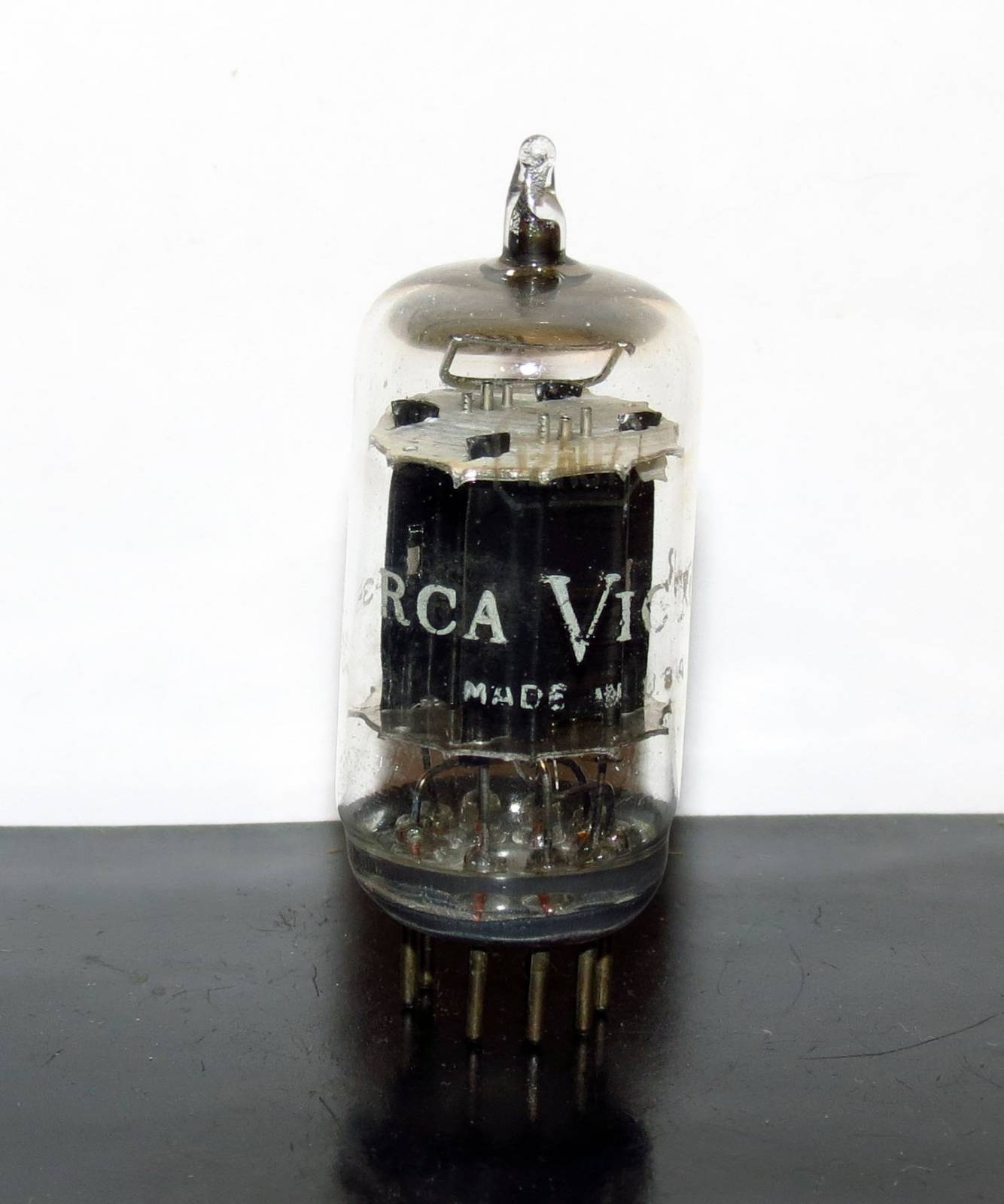
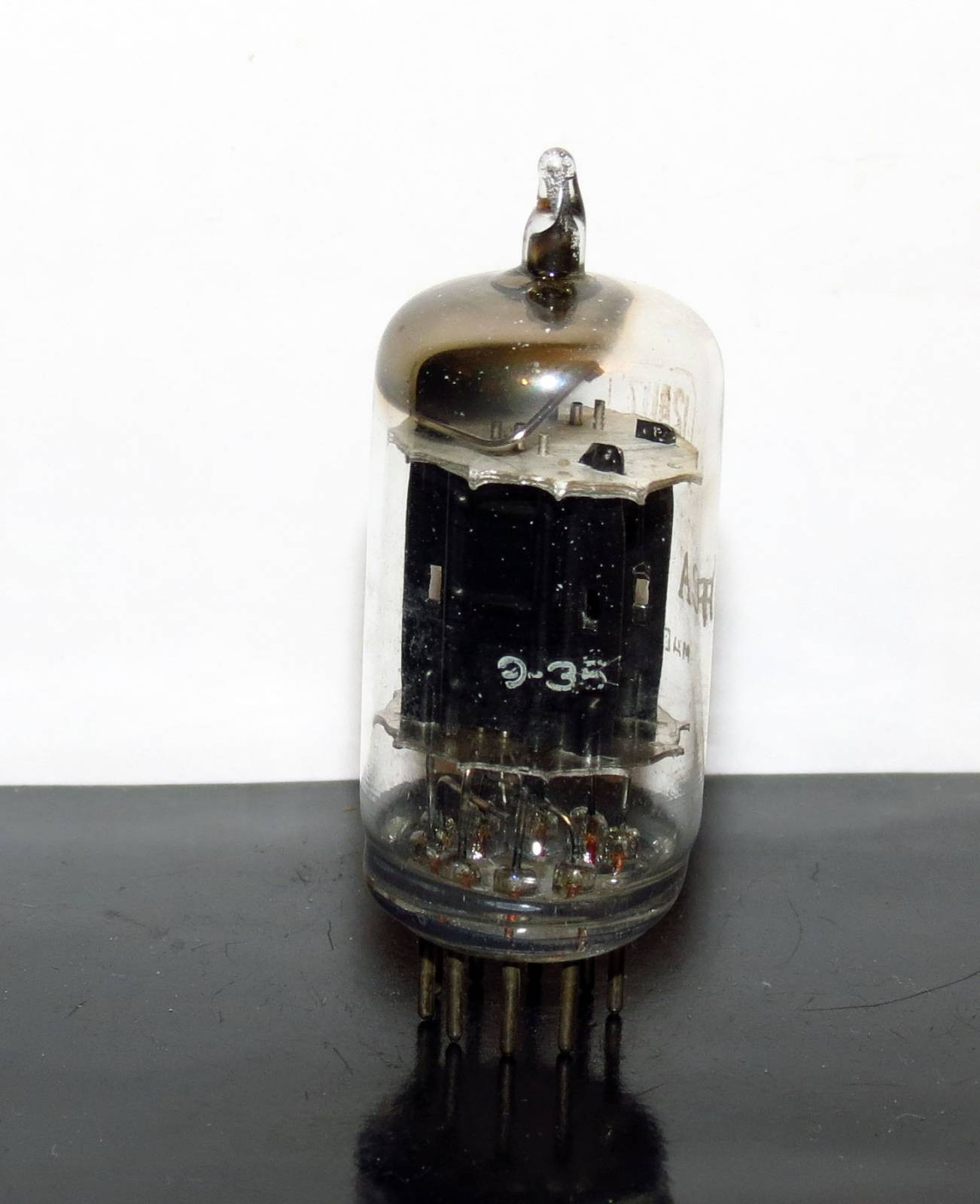
I recently acquired an exceptional example of early American vacuum‑tube production: an RCA Victor 12AU7 manufactured in 1949, during the period when the company still operated under the full RCA Victor name. The 12AU7 type was first introduced in 1946, yet despite examining more than 9,000–10,000 tubes over the years, I have never encountered a confirmed 1946 specimen, which underscores the rarity of the earliest production runs.
From a sonic standpoint, this tube captures the unmistakable character of late‑1940s and early‑1950s engineering. It offers a presentation that is highly transparent yet tonally rich, with a lively, open quality that became less common in later decades. By the end of the 1950s, manufacturing changes across the industry resulted in tubes that remained harmonically full but often lacked the clarity and immediacy found in these early examples.
The Radio Corporation of America (RCA) was founded in 1919 and quickly grew into one of the most influential electronics and communications companies in the world. In 1929, RCA acquired the Victor Talking Machine Company, merging radio, electronics, and recorded‑music divisions under the unified brand RCA Victor. This name appeared prominently on radios, phonographs, and vacuum tubes throughout the 1930s, 1940s, and early 1950s.
As RCA expanded and reorganized, the company gradually simplified its branding. By the mid‑1950s, the “Victor” designation began to disappear from technical and industrial products, including vacuum tubes. By the early 1960s, most components were labeled simply RCA, reflecting the company’s broader corporate identity.
The 12AU7, introduced by RCA in 1946, became one of the most widely used dual‑triode tubes in audio amplification, radio equipment, instrumentation, and early computing. Early RCA Victor‑era examples—such as the 1949 tube described above—represent the first generation of this design and are highly valued for their craftsmanship and distinctive sonic qualities.



 (23 votes, average: 3.65 out of 5)
 Loading...
I recently acquired an exceptional example of early American vacuum‑tube production: an RCA Victor 12AU7 manufactured in 1949, during the period when the company still operated under the full RCA Victor name. The 12AU7 type was first introduced in 1946, yet despite examining more than 9,000–10,000 tubes over the years, I have never encountered a confirmed 1946 specimen, which underscores the rarity of the earliest production runs.
From a sonic standpoint, this tube captures the unmistakable character of late‑1940s and early‑1950s engineering. It offers a presentation that is highly transparent yet tonally rich, with a lively, open quality that became less common in later decades. By the end of the 1950s, manufacturing changes across the industry resulted in tubes that remained harmonically full but often lacked the clarity and immediacy found in these early examples.
The Radio Corporation of America (RCA) was founded in 1919 and quickly grew into one of the most influential electronics and communications companies in the world. In 1929, RCA acquired the Victor Talking Machine Company, merging radio, electronics, and recorded‑music divisions under the unified brand RCA Victor. This name appeared prominently on radios, phonographs, and vacuum tubes throughout the 1930s, 1940s, and early 1950s.
As RCA expanded and reorganized, the company gradually simplified its branding. By the mid‑1950s, the “Victor” designation began to disappear from technical and industrial products, including vacuum tubes. By the early 1960s, most components were labeled simply RCA, reflecting the company’s broader corporate identity.
The 12AU7, introduced by RCA in 1946, became one of the most widely used dual‑triode tubes in audio amplification, radio equipment, instrumentation, and early computing. Early RCA Victor‑era examples—such as the 1949 tube described above—represent the first generation of this design and are highly valued for their craftsmanship and distinctive sonic qualities.
What is the price for a pair? I use it as driver tubes in power amp.
Best regards,
Sam Leung