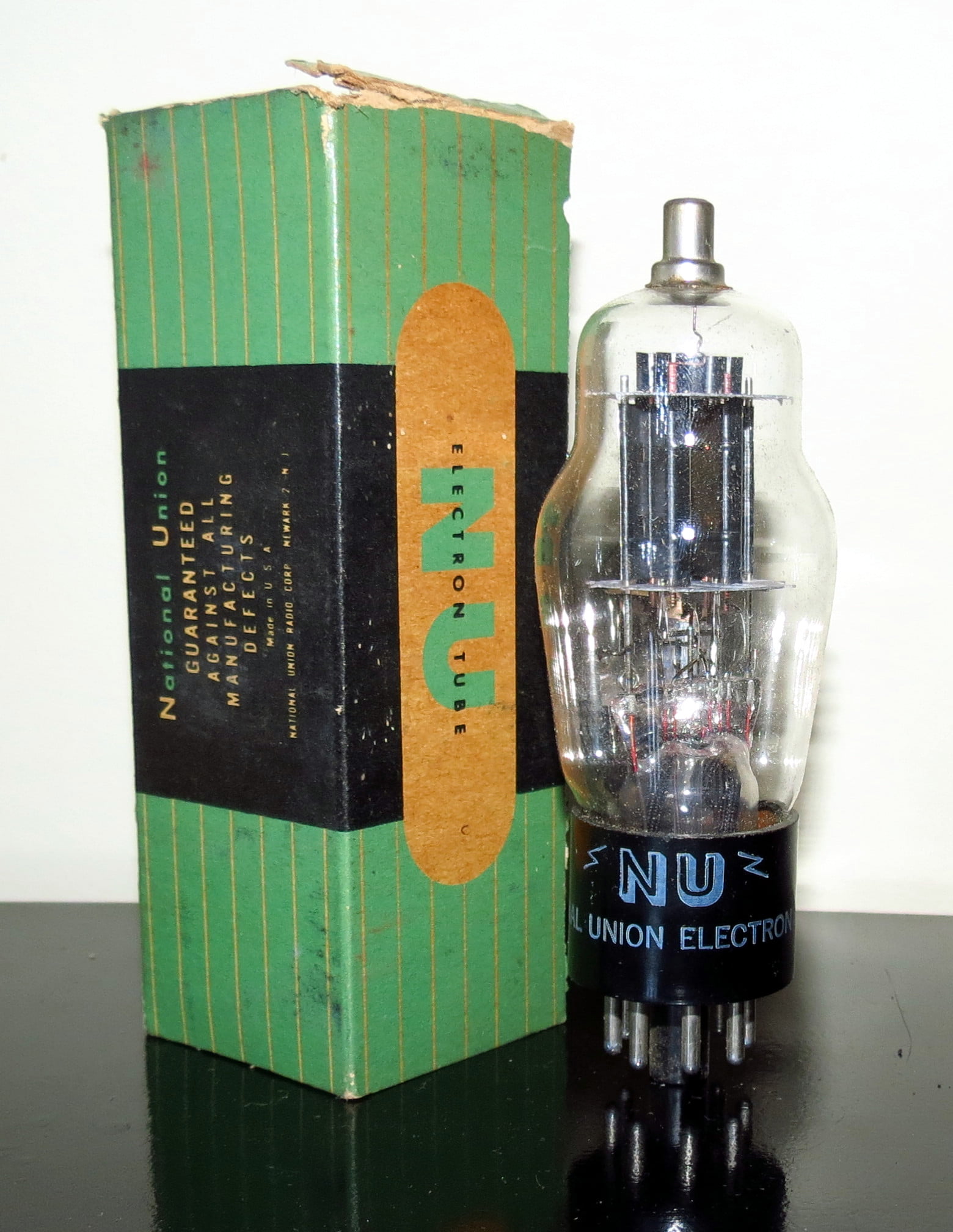
Another day, another 6F8G tube to put through the paces. This time, I’m looking at the National Union 6F8G with its distinct T-Plate construction—an exceptionally rare variant in the world of vintage glass. While National Union doesn’t carry the immediate name recognition of giants like RCA or Sylvania, that is largely a byproduct of their rarity rather than a lack of performance.
Audio Performance & Sound Signature
In terms of sheer capability, this tube stands shoulder-to-shoulder with the best. The sound signature is defined by its transparency. It shares a similar DNA with the Ken-Rad 6F8G, though it doesn’t quite reach the same levels of “air” or holographic space that the Ken-Rad is famous for.
Natural Tone: It offers an incredibly organic presentation with very little coloration.
Genre Pairing: Because of its honest, uncolored delivery, it is an excellent Jazz tube, allowing the timbre of acoustic instruments to shine through.
Final Verdict: A rare, high-performance alternative for those who find Sylvania too bright or RCA too warm. It is the “purist’s choice” for the 6F8G family.
A Brief History of National Union
The National Union Radio Corporation was formed in 1929 as a strategic merger between several smaller manufacturers, including Magnatron, Marathon, Sonatron, and Televocal. This consolidation allowed them to compete with the industry behemoths of the era.
During World War II, National Union became a vital contractor for the U.S. military, producing high-reliability tubes and even developing advanced cathode ray tube (CRT) technology. While they were eventually absorbed by larger conglomerates in the post-war era, they remain a “cult favorite” among audiophiles today for their unique internal geometries—like the T-Plate—and their balanced, sophisticated sonic profiles.


 (12 votes, average: 4.17 out of 5)
 Loading...
Another day, another 6F8G tube to put through the paces. This time, I’m looking at the National Union 6F8G with its distinct T-Plate construction—an exceptionally rare variant in the world of vintage glass. While National Union doesn’t carry the immediate name recognition of giants like RCA or Sylvania, that is largely a byproduct of their rarity rather than a lack of performance.
Audio Performance & Sound Signature
In terms of sheer capability, this tube stands shoulder-to-shoulder with the best. The sound signature is defined by its transparency. It shares a similar DNA with the Ken-Rad 6F8G, though it doesn’t quite reach the same levels of “air” or holographic space that the Ken-Rad is famous for.
Final Verdict: A rare, high-performance alternative for those who find Sylvania too bright or RCA too warm. It is the “purist’s choice” for the 6F8G family.
A Brief History of National Union
The National Union Radio Corporation was formed in 1929 as a strategic merger between several smaller manufacturers, including Magnatron, Marathon, Sonatron, and Televocal. This consolidation allowed them to compete with the industry behemoths of the era.
During World War II, National Union became a vital contractor for the U.S. military, producing high-reliability tubes and even developing advanced cathode ray tube (CRT) technology. While they were eventually absorbed by larger conglomerates in the post-war era, they remain a “cult favorite” among audiophiles today for their unique internal geometries—like the T-Plate—and their balanced, sophisticated sonic profiles.