One thought on “Little Dot MK II headphone amplifier”
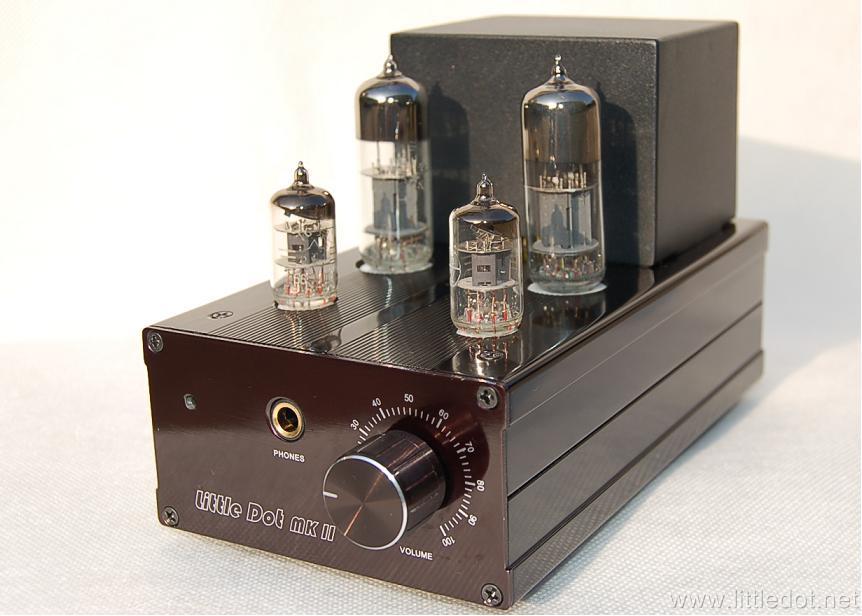
If you are searching for a high-quality headphone amplifier that won’t break the bank, the Little Dot MK II is a compelling contender. This compact unit truly delivers on its promises, and with the right glass, it can perform remarkably close to a significantly upgraded Bottlehead Crack. The signature is characterized by detailed transparency and a rich musicality that breathes life into your recordings.
One of the most versatile aspects of the Little Dot MK II is its ability to drive a wide range of headphones. I tested it with both the Grado SR-80 and the Sennheiser HD 650; in both instances, the amplifier performed admirably, providing more than enough power to drive the demanding Sennheisers. As with any tube-based system, the final output depends heavily on your choice of glass, and this is where the Little Dot truly shines. It supports an incredible variety of tube options, ranging from standard EF91, EF92, and EF95 variants to a massive list of industrial and military equivalents.
The options are virtually endless (6CF6, 6DC6, 6DK6, 6HQ6, 6CQ6 (EF92), 6AM6 (EF91), 8136, 6676, 7732, 6BZ6, 6JH6, 6064, 6065, 7498, 6AK5 (EF85), 6AJ5), including affordable US favorites from Tung-Sol, Sylvania, and RCA, as well as elite European glass from Genalex, Brimar, and Mullard. After extensive rolling, I found my personal sweet spot with the Genalex 6AM6 and 6N30P-DR combination. However, a word of advice: don’t feel pressured to invest in the ultra-expensive 6N30P-DR for this specific unit; while they are great tubes, they don’t reach their full potential here, and the much cheaper 6N6 performs nearly as well.
When compared to the legendary Bottlehead Crack, the Little Dot MK II holds its own but lacks that ultimate “airy” openness. The Crack, especially when paired with 5998 or WE 421A tubes, occupies a slightly higher class in terms of spatial depth and bass authority. Nevertheless, the Little Dot provides very respectable bass and a level of engagement that is rare at this price point.
Final Verdict
The Little Dot MK II is a tube-roller’s paradise. It offers a transparent, musical sound that can be tailored to your exact preference thanks to its unparalleled compatibility with affordable vintage glass. If you want a versatile, high-performing amplifier that offers a gateway into the world of vacuum tubes without a massive investment, this is RECOMMENDED.



 (11 votes, average: 3.82 out of 5)
 Loading...
If you are searching for a high-quality headphone amplifier that won’t break the bank, the Little Dot MK II is a compelling contender. This compact unit truly delivers on its promises, and with the right glass, it can perform remarkably close to a significantly upgraded Bottlehead Crack. The signature is characterized by detailed transparency and a rich musicality that breathes life into your recordings.
One of the most versatile aspects of the Little Dot MK II is its ability to drive a wide range of headphones. I tested it with both the Grado SR-80 and the Sennheiser HD 650; in both instances, the amplifier performed admirably, providing more than enough power to drive the demanding Sennheisers. As with any tube-based system, the final output depends heavily on your choice of glass, and this is where the Little Dot truly shines. It supports an incredible variety of tube options, ranging from standard EF91, EF92, and EF95 variants to a massive list of industrial and military equivalents.
The options are virtually endless (6CF6, 6DC6, 6DK6, 6HQ6, 6CQ6 (EF92), 6AM6 (EF91), 8136, 6676, 7732, 6BZ6, 6JH6, 6064, 6065, 7498, 6AK5 (EF85), 6AJ5), including affordable US favorites from Tung-Sol, Sylvania, and RCA, as well as elite European glass from Genalex, Brimar, and Mullard. After extensive rolling, I found my personal sweet spot with the Genalex 6AM6 and 6N30P-DR combination. However, a word of advice: don’t feel pressured to invest in the ultra-expensive 6N30P-DR for this specific unit; while they are great tubes, they don’t reach their full potential here, and the much cheaper 6N6 performs nearly as well.
When compared to the legendary Bottlehead Crack, the Little Dot MK II holds its own but lacks that ultimate “airy” openness. The Crack, especially when paired with 5998 or WE 421A tubes, occupies a slightly higher class in terms of spatial depth and bass authority. Nevertheless, the Little Dot provides very respectable bass and a level of engagement that is rare at this price point.
Final Verdict
The Little Dot MK II is a tube-roller’s paradise. It offers a transparent, musical sound that can be tailored to your exact preference thanks to its unparalleled compatibility with affordable vintage glass. If you want a versatile, high-performing amplifier that offers a gateway into the world of vacuum tubes without a massive investment, this is RECOMMENDED.