One thought on “Dario Miniwatt 18ECC/E180CC Pinched Waist D-getter”
This 1956 Dario Miniwatt 18ECC/E180CC is a rare gem that I stumbled upon quite by accident. Featuring a distinctive pinched waist and D-getter construction, it is a visually and sonically stunning piece of vintage engineering. While documentation is scarce—even the pinout required some sleuthing—my research confirms it as a direct replacement for E180CC/7062 tubes.
In terms of compatibility, it serves as a viable substitute for the 12AT7/ECC81 in most circuits, though it stands about a half-inch taller and pulls slightly more current (0.3 mA). With a gain of approximately 40 mu, it also produces fantastic results when swapped into 12AU7/ECC82 positions. While the E180CC is rated for a 10,000-hour lifespan, the longevity of this specific Dario variant remains an open question, but the trade-off in audio quality is undeniable.
The sonic profile is where this tube truly shines. It is the cream of the crop of triode tubes: incredibly smooth, superbly delicate, and wonderfully rich. It breathes new life into familiar performances, offering a musicality where notes seem to linger indefinitely. It is a mystery why such a high-caliber tube remains relatively unknown and available.
A Brief History of Dario Miniwatt
The “Dario” brand was the French subsidiary of the Philips empire. Under the “Miniwatt” label—a trademark used globally by Philips and its subsidiaries like Mullard and Valvo—these tubes were manufactured to the highest European standards. During the 1950s, the French factories often produced unique structural variations, such as the pinched waist design seen here, which was intended to reduce microphonics and increase mechanical stability. Because Dario was primarily a domestic brand for the French market, many of their best production runs remained “hidden” from international collectors for decades, leading to the “accidental” discoveries enthusiasts enjoy today.
Final Verdict:
An absolute masterpiece of vacuum tube era craftsmanship. If you can find one, it is highly recommended for anyone seeking a lush, high-end triode sound. It’s impossible not to fall in love with this tube.
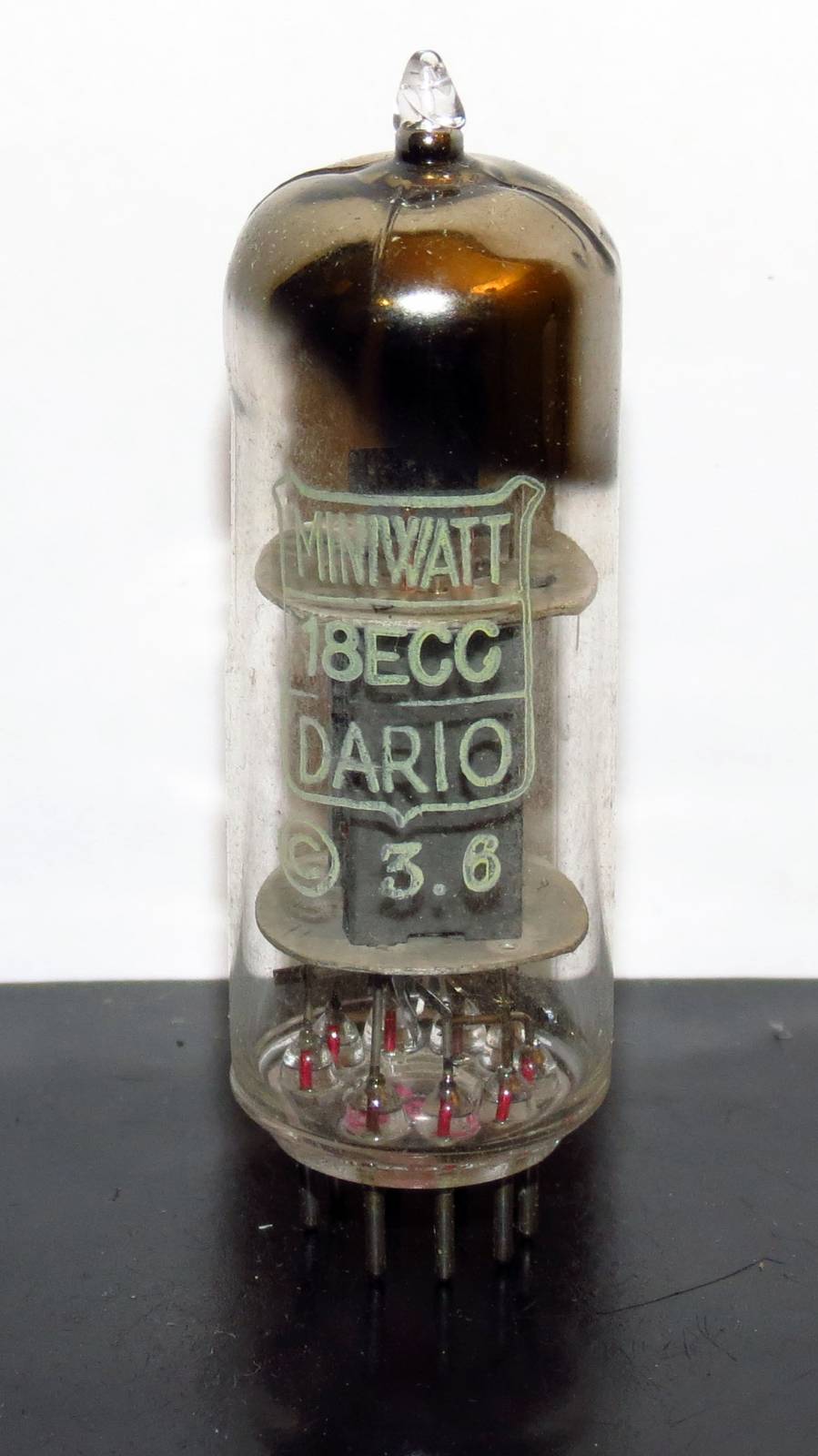

This 1956 Dario Miniwatt 18ECC/E180CC is a rare gem that I stumbled upon quite by accident. Featuring a distinctive pinched waist and D-getter construction, it is a visually and sonically stunning piece of vintage engineering. While documentation is scarce—even the pinout required some sleuthing—my research confirms it as a direct replacement for E180CC/7062 tubes.
In terms of compatibility, it serves as a viable substitute for the 12AT7/ECC81 in most circuits, though it stands about a half-inch taller and pulls slightly more current (0.3 mA). With a gain of approximately 40 mu, it also produces fantastic results when swapped into 12AU7/ECC82 positions. While the E180CC is rated for a 10,000-hour lifespan, the longevity of this specific Dario variant remains an open question, but the trade-off in audio quality is undeniable.
The sonic profile is where this tube truly shines. It is the cream of the crop of triode tubes: incredibly smooth, superbly delicate, and wonderfully rich. It breathes new life into familiar performances, offering a musicality where notes seem to linger indefinitely. It is a mystery why such a high-caliber tube remains relatively unknown and available.
A Brief History of Dario Miniwatt
The “Dario” brand was the French subsidiary of the Philips empire. Under the “Miniwatt” label—a trademark used globally by Philips and its subsidiaries like Mullard and Valvo—these tubes were manufactured to the highest European standards. During the 1950s, the French factories often produced unique structural variations, such as the pinched waist design seen here, which was intended to reduce microphonics and increase mechanical stability. Because Dario was primarily a domestic brand for the French market, many of their best production runs remained “hidden” from international collectors for decades, leading to the “accidental” discoveries enthusiasts enjoy today.
Final Verdict:
An absolute masterpiece of vacuum tube era craftsmanship. If you can find one, it is highly recommended for anyone seeking a lush, high-end triode sound. It’s impossible not to fall in love with this tube.