No reviews found on the internet. Read our reviews.
Share this post:
2 thoughts on “Bendix 6106 Rectifier”
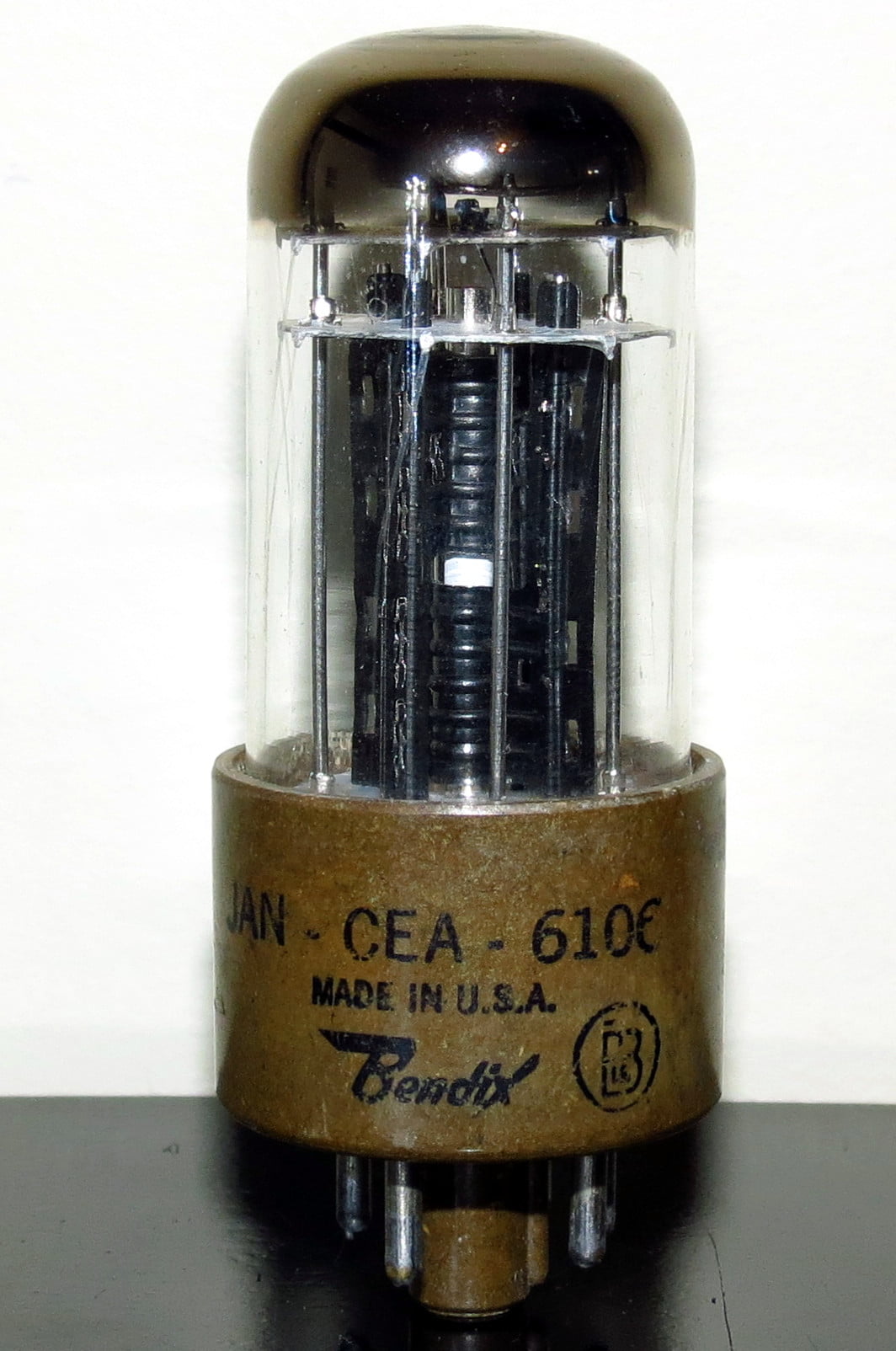
If you are looking for the absolute pinnacle of vacuum tube engineering, look no further. The Bendix 6106 isn’t just a component; it is practically a piece of industrial art. Designed with an almost fanatical emphasis on reliability and durability, this tube was built to survive environments that would shatter standard glass. Here is my take on this “over-engineered” masterpiece.
Performance & Build Quality
Ruggedized Design: The first thing you’ll notice is the triple mica spacers. These aren’t just for show; they provide critical internal support to prevent microphonics and element shift during intense vibrations.
Extreme Specs: This tube features a melamine base, specifically engineered to prevent arcing at high altitudes—up to 80,000 feet (~25 km). While your home audio setup likely won’t be breaking the sound barrier, it’s nice to know your rectifier is ready for a dogfight.
The 5Y3GT Equivalent: In terms of electrical specs, the 6106 is a direct equivalent to the 5Y3GT. However, it is built to a much higher standard, offering significantly better longevity and stability.
Pro Tip: Be patient! The 6106 has an incredibly long warm-up time. It takes about 45 seconds for the tube to “wake up” and start passing voltage. This slow-start behavior is actually a benefit, as it provides a natural soft-start for the rest of your circuit’s tubes.
A Brief History of Bendix Red Bank Tubes
The Bendix Corporation, specifically its Red Bank division in New Jersey, occupied a unique niche in the mid-20th century tube market. Unlike RCA or GE, who focused on mass-market consumer electronics, Bendix specialized in military, aviation, and aerospace applications.
During the Cold War, the demand for electronics that could withstand the high G-forces of rockets and the extreme temperatures of jet engines led Bendix to develop their “Special Purpose” line. These tubes often featured:
Non-standard glass: Many used “hard glass” (aluminosilicate) to handle higher temperatures.
Ceramic spacers: Instead of mica, to further reduce noise and increase heat resistance.
Rigorous Testing: Every tube was subjected to vibration and shock tests that would destroy a standard commercial tube.
Today, Bendix “Red Bank” tubes like the 6106, 6900, and 6385 are highly sought after by audiophiles not just for their indestructible build, but for their exceptional clarity and low noise floor. They represent the final, most refined era of vacuum tube technology before the transistor took over the skies.
Final Verdict: Whether you’re building a “forever” amp or just want a rectifier that can survive a rocket launch, the Bendix 6106 is the gold standard.


 (15 votes, average: 4.13 out of 5)
 Loading...
If you are looking for the absolute pinnacle of vacuum tube engineering, look no further. The Bendix 6106 isn’t just a component; it is practically a piece of industrial art. Designed with an almost fanatical emphasis on reliability and durability, this tube was built to survive environments that would shatter standard glass. Here is my take on this “over-engineered” masterpiece.
Performance & Build Quality
A Brief History of Bendix Red Bank Tubes
The Bendix Corporation, specifically its Red Bank division in New Jersey, occupied a unique niche in the mid-20th century tube market. Unlike RCA or GE, who focused on mass-market consumer electronics, Bendix specialized in military, aviation, and aerospace applications.
During the Cold War, the demand for electronics that could withstand the high G-forces of rockets and the extreme temperatures of jet engines led Bendix to develop their “Special Purpose” line. These tubes often featured:
Today, Bendix “Red Bank” tubes like the 6106, 6900, and 6385 are highly sought after by audiophiles not just for their indestructible build, but for their exceptional clarity and low noise floor. They represent the final, most refined era of vacuum tube technology before the transistor took over the skies.
Final Verdict: Whether you’re building a “forever” amp or just want a rectifier that can survive a rocket launch, the Bendix 6106 is the gold standard.