
 |
 |
 |
In the vast and winding history of vacuum tubes, few components have achieved the ubiquity and enduring relevance of the 12AU7. This unassuming, medium-mu dual triode became the workhorse of countless electronic devices, finding its way into classic amplifiers, sophisticated military gear, and robust industrial machinery. Its journey from a post-war necessity to an audiophile favorite is a testament to its practical and adaptable design.
The Dawn of 12au7 Triode
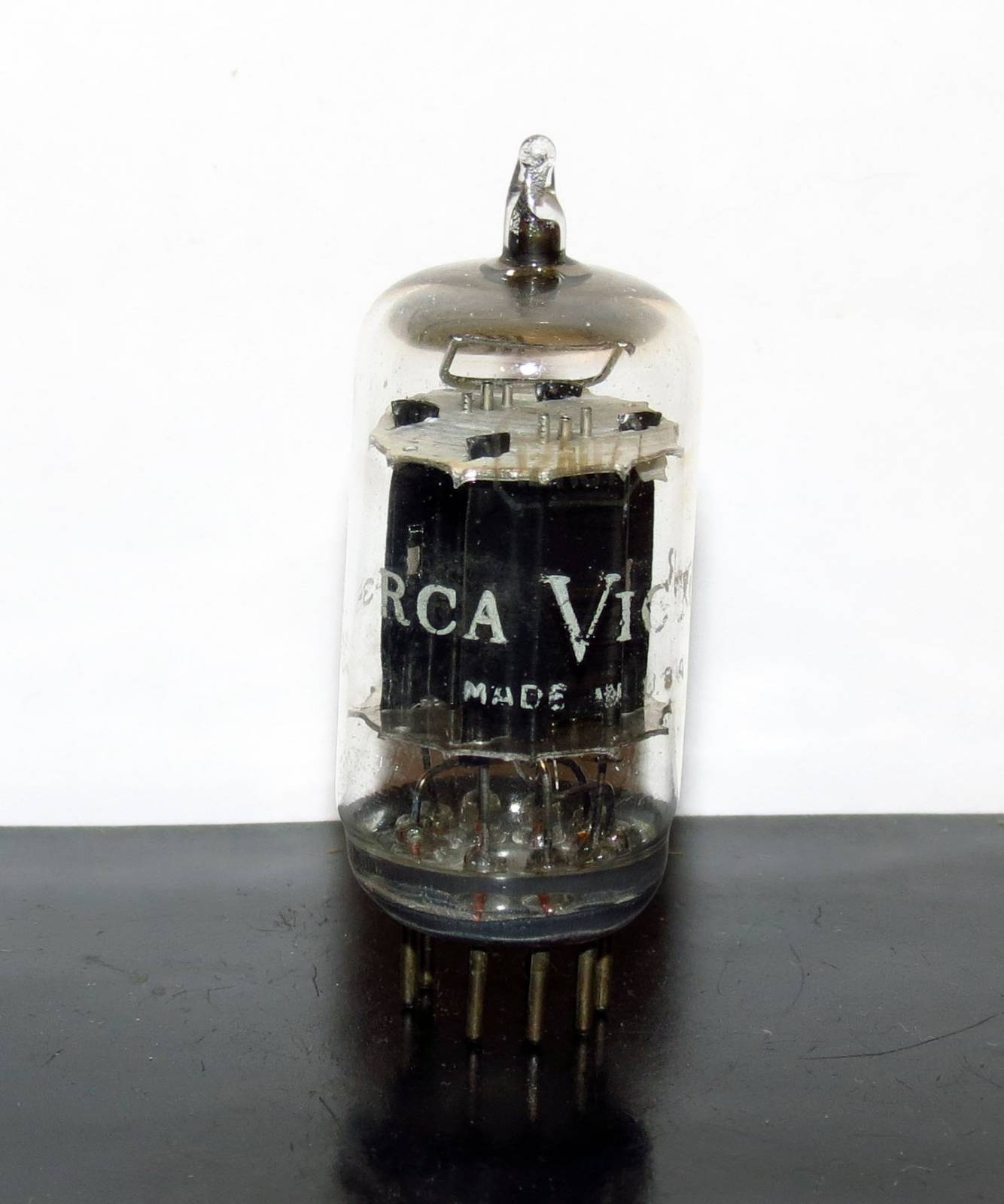
The 12AU7 was introduced to the world in 1947 by the Radio Corporation of America (RCA).
The driving force behind its development was the post-World War II electronics boom. Engineers needed efficient and compact solutions to build the next generation of radios, televisions, and nascent computing devices. The 12AU7, part of the new ‘miniature’ 9-pin tube family, offered a significant advantage: it contained two independent triode amplifying stages within a single glass envelope.
Its design was based on the earlier and larger 6SN7 octal tube, which had been a staple in pre-war and wartime electronics. By shrinking the physical size while maintaining similar electrical characteristics (most notably a amplification factor, or ‘mu’, of around 17), RCA provided a space-saving and cost-effective alternative.
The 12AU7’s primary ‘why’ was simple: versatility and efficiency. Its medium gain made it ideal for a wide range of applications. It could serve as a voltage amplifier, a phase inverter (crucial for push-pull power amplifiers), a cathode follower, or a multivibrator in early computers and television circuits. It wasn’t designed to be the highest gain tube (that role fell to its high-mu sibling, the 12AX7) or a power output tube. Instead, it was the perfect “glue” component, handling signal processing and intermediate stages with reliable performance.
This combination of low distortion, moderate gain, and dual-unit design meant that a single 12AU7 could often replace two separate tubes, simplifying circuit layouts and reducing the overall footprint of electronic devices.
Redefining Reliability: Military and Industrial Variants
While the standard 12AU7 was a robust performer, the demanding conditions of military and industrial applications called for even greater ruggedness and consistency. This led to the creation of premium, specialized versions of the tube.
The Military Might: The 5814
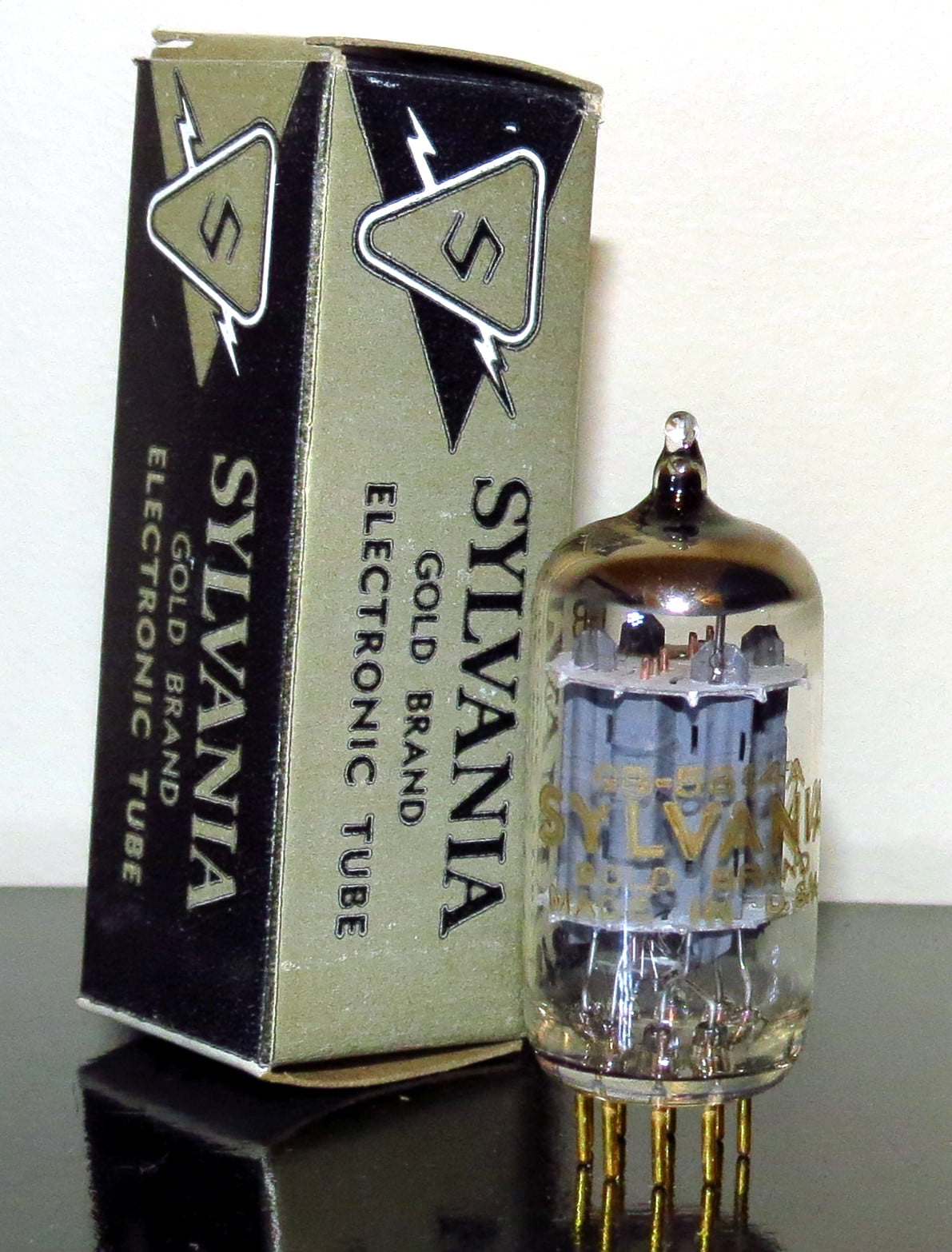
The 5814 (and its ruggedized counterpart, the 5814A) was developed to meet stringent Joint Army-Navy (JAN) specifications for military use. These tubes were built to withstand the intense shock and vibration found in aircraft, communication gear, and other battlefield electronics.
To achieve this, 5814 tubes featured several structural enhancements:
- Ruggedized internal construction: Sturdier plate supports, thicker glass, and mica spacers with additional contact points reduced microphonics (noise caused by mechanical vibration) and increased physical durability.
- Improved cathode material: A more robust and long-lasting cathode was used to ensure reliable operation under extended use and varying voltages.
- Lower noise and microphonics: These tubes were often subjected to stricter testing for noise and mechanical sensitivity.
A distinctive feature often seen on early 5814 tubes is the triple mica spacer stack, which provided superior internal stability compared to the double mica typically found in standard 12AU7s. For audiophiles and studio engineers today, vintage JAN-5814As are prized for their low noise floor, lack of microphonics, and exceptionally clear, balanced sound.
The Industrial Workhorse: The 6189
Parallel to military needs, the burgeoning industrial sector required tubes that could provide unwavering reliability over an extended lifespan. While standard tubes might last for thousands of hours, a critical industrial controller or computer might run 24/7, making failure costly and disruptive. The 6189 was designed to address this.
The primary focus of the 6189 was not necessarily absolute ruggedness like the 5814, but rather:
- Long Life Cathodes: The key feature was a specialized cathode structure (often an ‘alkaline’ or long-life variety) engineered for significantly extended operational hours. Some variants were specified for 10,000+ hours of service.
- Consistency: Production runs were controlled to ensure extremely uniform electrical characteristics across different batches, critical for complex, sensitive industrial circuits.
- Stable Operation: These tubes were tested to maintain their performance specifications over long periods, minimizing drift and recalibration needs.
Today, a 6189 (often referred to as a 6189WA in its premium form) is sought after for its incredibly stable performance and very long operational life.
Special Quality and the European Touch: E82CC
In Europe, a parallel system of premium ‘Special Quality’ tubes emerged, often designated with a four-digit number (like 6067) or the ‘E’ prefix followed by the number 82 (e.g., E82CC). The ‘E’ indicated a ‘Special Quality’ version with a 6.3V or 12.6V heater, and the ’82’ designated it as a 12AU7/ECC82 equivalent.
The E82CC represented the pinnacle of European tube manufacturing for the 12AU7 family. Like their US industrial (6189) and military (5814) counterparts, E82CC tubes were built with:
- Extended Life: Guaranteed operational hours (often 10,000 hours or more).
- Rugged Construction: Designed to be low-noise and non-microphonic.
- Tight Tolerances: Precise matching between the two triode sections.
Manufacturers like Mullard (UK), Siemens (Germany), Valvo (Germany), and Amperex (Holland/US) produced legendary E82CCs. These tubes are particularly valued by audiophiles for their superb linearity, highly detailed sound, and a distinctive “airiness” and three-dimensional soundstage.
The Telefunken ECC802S: A Legend of Precision
The discussion of specialized 12AU7s is incomplete without mentioning the iconic Telefunken ECC802S. This tube, produced in Ulm, Germany, is widely regarded by many as the definitive, finest-quality version of the 12AU7 ever made.
Introduced to meet the critical demands of measurement equipment, professional broadcasting, and medical devices, the ECC802S went beyond the standard requirements for a ‘Special Quality’ tube.
- The ‘S’ for Special: The ‘S’ suffix denoted the highest tier of selection. These were the “cream of the crop,” selected for the lowest noise, best channel matching, and most stable characteristics.
- Incredible Precision: Telefunken employed extremely stringent quality control and manufacturing tolerances. The grids were gold-plated to reduce grid current and improve long-term stability. The internal components were aligned with unparalleled precision.
- The Diamond Bottom: This is the most famous hallmark of Telefunken Ulm tubes. A small, molded diamond shape (or ‘<>’) with a factory code inside is found on the glass base between the pins. This is the definitive mark of an authentic Telefunken tube from this era.
The history of the ECC802S is one of German engineering excellence applied to vacuum tube technology. It represents the uttermost refinement of the dual-triode concept. In high-end audio, an original Telefunken ECC802S is a highly coveted (and expensive) item, prized for its astonishing neutrality, transparency, and capability to resolve the finest musical details without coloration.
From Prague with Passion: The Tesla ECC802S
The story of the ECC802S extends beyond Germany. During the Cold War, the Czechoslovakian company Tesla (Technika Slaboproudá) produced its own versions of Western tube types. While Tesla manufactured a standard ECC82 (12AU7), they also created their own premium ECC802S.
The Tesla ECC802S, typically made in the Rožnov p.R. factory, was a serious piece of engineering, designed to compete directly with or replace Telefunken tubes in Warsaw Pact industrial and professional equipment.
- Structural Robustness: While not direct copies, Tesla ECC802S tubes often mirrored the internal layout and materials of the premium European tubes, featuring robust plate structures and often, thick mica spacers.
- The Yellow Label Legend: Early production runs are particularly famous. They were packaged in distinctive yellow and blue boxes and had vibrant yellow labeling on the glass. The “yellow label” Tesla ECC802S from the 1960s is considered by many to be the sonic equal of the Telefunken, offering a similarly neutral, detailed, and open presentation, but sometimes with a slightly different “flavor” or a more robust low-end response.
While later production Tesla ECC802S tubes are still excellent, it is the early “yellow label” variants that have a revered place in the audiophile world, showcasing that top-tier vacuum tube manufacturing was a global phenomenon.
An Enduring Legacy
The history of the 12AU7 is not merely a record of an obsolete component, but a story of utility and refinement. It began as a practical solution to a compact-design problem, quickly establishing itself as an indispensable circuit element. This success spurred the creation of dedicated military (5814) and industrial (6189) variants, pushing the boundaries of ruggedness and longevity. The “Special Quality” E82CCs and, most notably, the legendary ECC802S from Telefunken and Tesla, represent the absolute peak of the technology—precision instruments created for the most critical applications. Today, decades after production ceased for these premium tubes, their performance ensures that the chronicle of the 12AU7 remains an active and relevant topic for everyone passionate about high-fidelity sound.