

 (11 votes, average: 4.00 out of 5)
 Loading...
The tube is the king of the tubes if used with care. This is superbly detailed tube with huge sound stage. Could be an overkill for a bright system, because it will make the system sound clinically bright and lifeless, but if mixed with warm sounding tubes (anything with black plates), it can produce and incredible sound that other tubes will be envious off 🙂
“Watch for the rare Telefunken smoothplates with a cloth label on the glass marked “selected tube”. Often these have red painted tips. . . These were all screened for critical use in medical equipment, with the “selected tube” or L&N versions being the best. Both red and blue tips are incredibly quiet and very three dimensional in sound.” Read
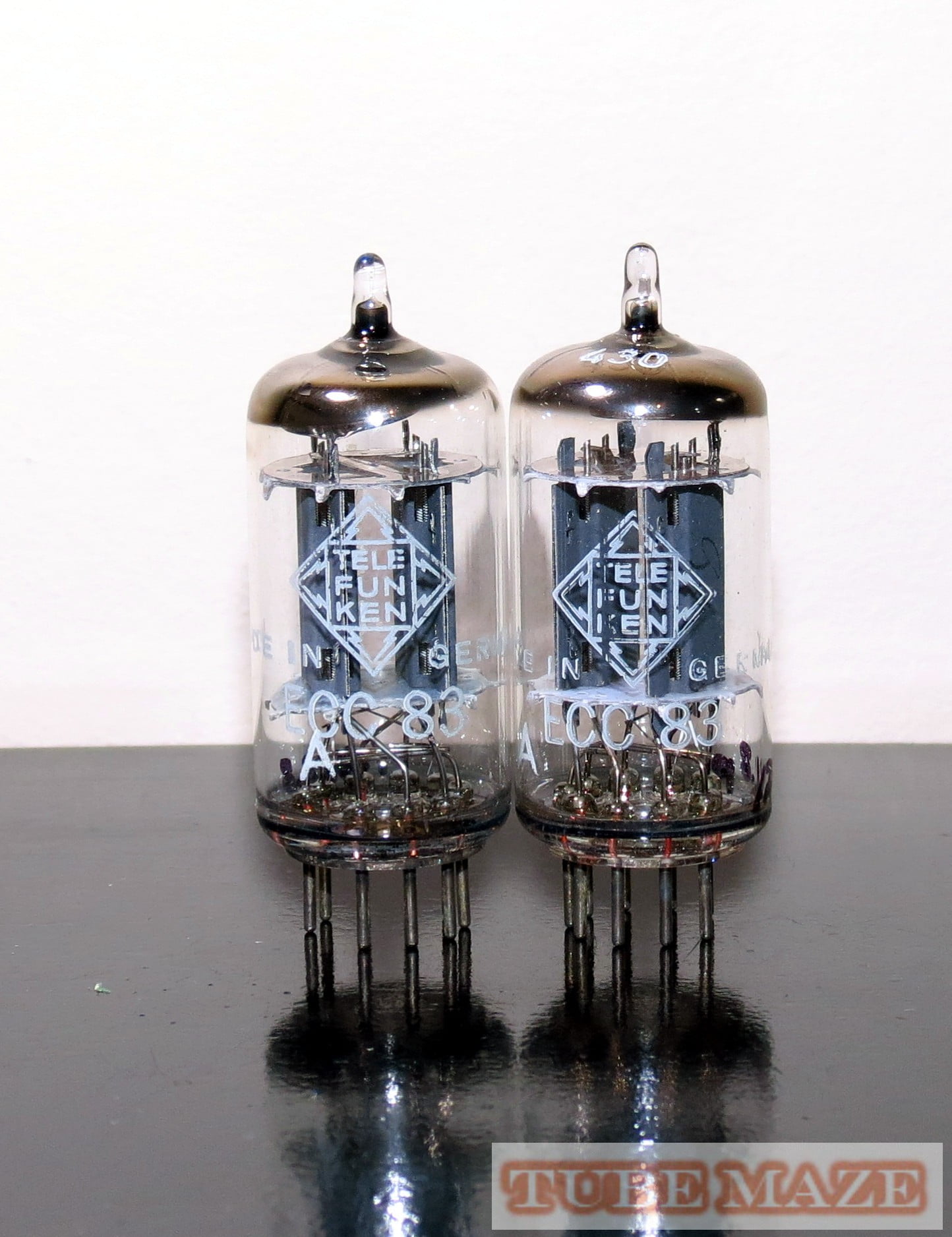
The Telefunken 12AX7 Smooth Plate is a high-stakes component that can either transform or unbalance your entire audio system. When I tested these in a Dared 300B, the results were merely acceptable, primarily because that amplifier already leans toward the brighter side of the spectrum. However, the experience changed completely when I rolled them into a McIntosh 275.
The sonic presentation was nothing short of breathtaking. The soundstage expanded so significantly that the music felt immersive, as if it were emanating from every corner of the room simultaneously. If you crave unmatched clarity, air, and holographic imaging, this tube is the definitive choice. While they are becoming exceptionally expensive, the “Special Select” quad I used proved to be dead quiet and technically flawless. This is a superb investment for anyone looking to make a vintage amplifier truly come alive.
Final Verdict: An elite, high-resolution tube that offers a massive soundstage and incredible detail, though its clinical precision is best paired with warmer systems to avoid excess brightness.
OK; the Telefunken 12AX7 is a good tube. “Good”, that is. I have issues with it, though. There are SO MANY 12AX7s that are quite simply, much more interesting and sonically superior to the Telefunken. For example, all the adjectives that Brent Jesse and many audiophiles use to describe the Telefunken (huge soundstage; incredible dimensionality, impressive sense of ‘air’ to the treble) are SO much MORE true of other 12AX7s. Want a huge soundstage? The 1950s longplate Mullard 12AX7 (Mc1, or f91/f92 version) makes the Telefunken 12AX7 sound flat, 2D, and almost cold. The blackplate RCA 12AX7, the 1950-1958 TungSol 12AX7, and the best 12AX7 ever made–the longplate Mullard from the 1950s–all have “the sound”; the sound that we all seek as tube audio people. “The sound” is one of high detail, deep 3-D soundstaging, airy, extended treble, and more than anything a warmth and musicality that simply sounds like live acoustic music. Playing well recorded live acoustic music on my VPI TNT/SME 309/Dynavector MC cart/Audio Research SP8 MK II using longplate Mullards in the phono section of my ARC SP8,(you cannot grasp the true sonic nature of any tube in an amplifier or buffer stage) I can hear the guitar pick hit the steel guitar strings at the very beginning of the note; I can hear the faintest echo from the studio walls, I can almost be in the studio itself. To me, Mullards sound like analog and Telefunkens sound like digital. Telefunkens are like bright, silvery white industrial light; the best 12AX7s are like early autumn sunshine that gently illuminates every nook and cranny of a fine LP. Mullards are music. For those on a budget; blackplate RCA and 1950s TungSols are IT. Less subtle warmth but still infinitely superior to Telefunken. Telefunkens on eBay have dropped below $200/quad for tubes with flawless logos. A single longplate/square getter Mullard sold for $500 recently. They are THAT good and THAT rare.