“This cartridge is a breakthrough component in my experience.” Read
“With the Helikon, it really doesn’t sound like a “record player” anymore.” Read
Share this post:
One thought on “Lyra Helikon MC Cartridge”
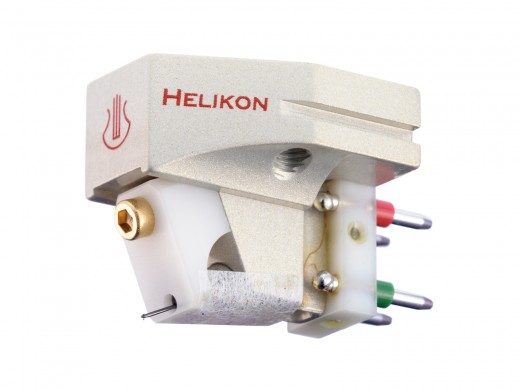
After living with the Lyra Helikon MC Cartridge for an extended period, I have found it to be a component of stunning extremes. It isn’t a “jack-of-all-trades” transducer, but in the areas where it shines, it is nothing short of transformative.
The standout characteristic here is “air.” The Helikon generates an expansive, cavernous soundstage that exceeds almost any other cartridge in its class. When set up correctly, it possesses the uncanny ability to make your speakers completely disappear, leaving behind a transparent performance that brings vocal jazz and classical arrangements to life.
However, that transparency comes with a trade-off in the lower frequencies. The bass response is notably lean; without a subwoofer to fill in the gaps, acoustic bass and orchestral percussion can sound somewhat unnatural. Additionally, the Helikon is quite sensitive to surface noise. While a pristine press sounds ethereal, any imperfections in the vinyl are highlighted more aggressively than with other cartridges.
When compared to high-end heavyweights like the ZYX 4D or Benz Micro Ruby 3, the Helikon lacks a bit of ultimate smoothness, though this is really only apparent during direct A/B testing. Because of its transparency and light low-end, it is a bit of a “love/hate” relationship. Fortunately, since I use a removable headshell on my Pioneer PLC-590, it’s easy to swap in whenever I’m in the mood for something exceptionally light and airy.
Technical Characteristics
Type: Moving Coil (MC), medium-output Stylus: Lyra-designed long-footprint linear contact Cantilever: Boron rod Output Voltage: 0.5mV (5.0cm/sec) Frequency Range: 10Hz – 50kHz Channel Separation: 35dB or better at 1kHz Compliance: Approx. 12 x 10-6 cm/dyne at 100Hz Tracking Force: 1.7g – 1.8g Internal Impedance: 5.5 ohms
Final Verdict
The Lyra Helikon is a specialist’s dream. While its bass-light signature and sensitivity to record wear make it a specialized choice, its unrivaled soundstage and transparency make it an essential addition for listeners who value detail and scale. Because of the transparency and week bass, it’s a love/hate relationship with the cartridge, but since I have removable head shell on Pioneer PLC-590, this is not a problem, I just through it in when I feel that I need to listen to something light and transparent.



 (9 votes, average: 3.78 out of 5)
 Loading...
After living with the Lyra Helikon MC Cartridge for an extended period, I have found it to be a component of stunning extremes. It isn’t a “jack-of-all-trades” transducer, but in the areas where it shines, it is nothing short of transformative.
The standout characteristic here is “air.” The Helikon generates an expansive, cavernous soundstage that exceeds almost any other cartridge in its class. When set up correctly, it possesses the uncanny ability to make your speakers completely disappear, leaving behind a transparent performance that brings vocal jazz and classical arrangements to life.
However, that transparency comes with a trade-off in the lower frequencies. The bass response is notably lean; without a subwoofer to fill in the gaps, acoustic bass and orchestral percussion can sound somewhat unnatural. Additionally, the Helikon is quite sensitive to surface noise. While a pristine press sounds ethereal, any imperfections in the vinyl are highlighted more aggressively than with other cartridges.
When compared to high-end heavyweights like the ZYX 4D or Benz Micro Ruby 3, the Helikon lacks a bit of ultimate smoothness, though this is really only apparent during direct A/B testing. Because of its transparency and light low-end, it is a bit of a “love/hate” relationship. Fortunately, since I use a removable headshell on my Pioneer PLC-590, it’s easy to swap in whenever I’m in the mood for something exceptionally light and airy.
Technical Characteristics
Type: Moving Coil (MC), medium-output
Stylus: Lyra-designed long-footprint linear contact
Cantilever: Boron rod
Output Voltage: 0.5mV (5.0cm/sec)
Frequency Range: 10Hz – 50kHz
Channel Separation: 35dB or better at 1kHz
Compliance: Approx. 12 x 10-6 cm/dyne at 100Hz
Tracking Force: 1.7g – 1.8g
Internal Impedance: 5.5 ohms
Final Verdict
The Lyra Helikon is a specialist’s dream. While its bass-light signature and sensitivity to record wear make it a specialized choice, its unrivaled soundstage and transparency make it an essential addition for listeners who value detail and scale. Because of the transparency and week bass, it’s a love/hate relationship with the cartridge, but since I have removable head shell on Pioneer PLC-590, this is not a problem, I just through it in when I feel that I need to listen to something light and transparent.